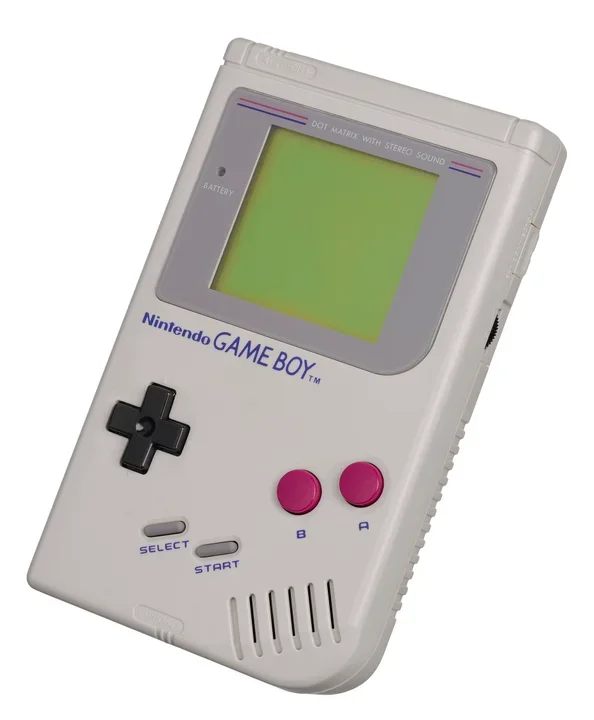
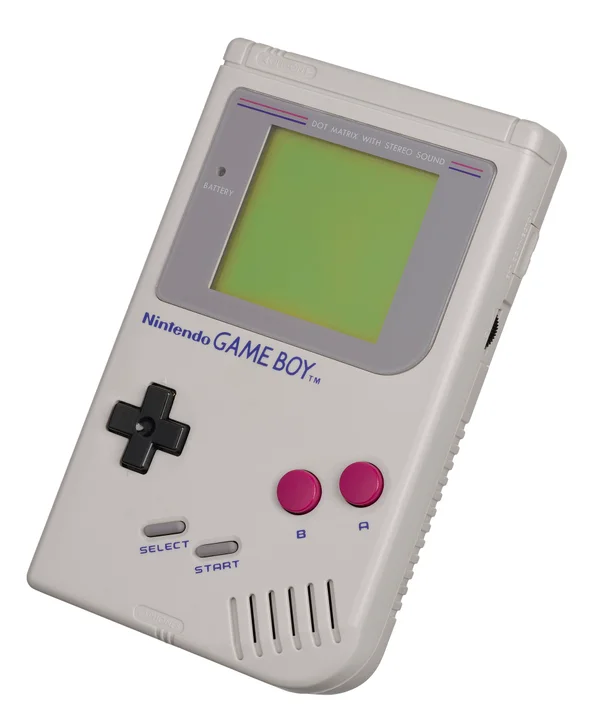
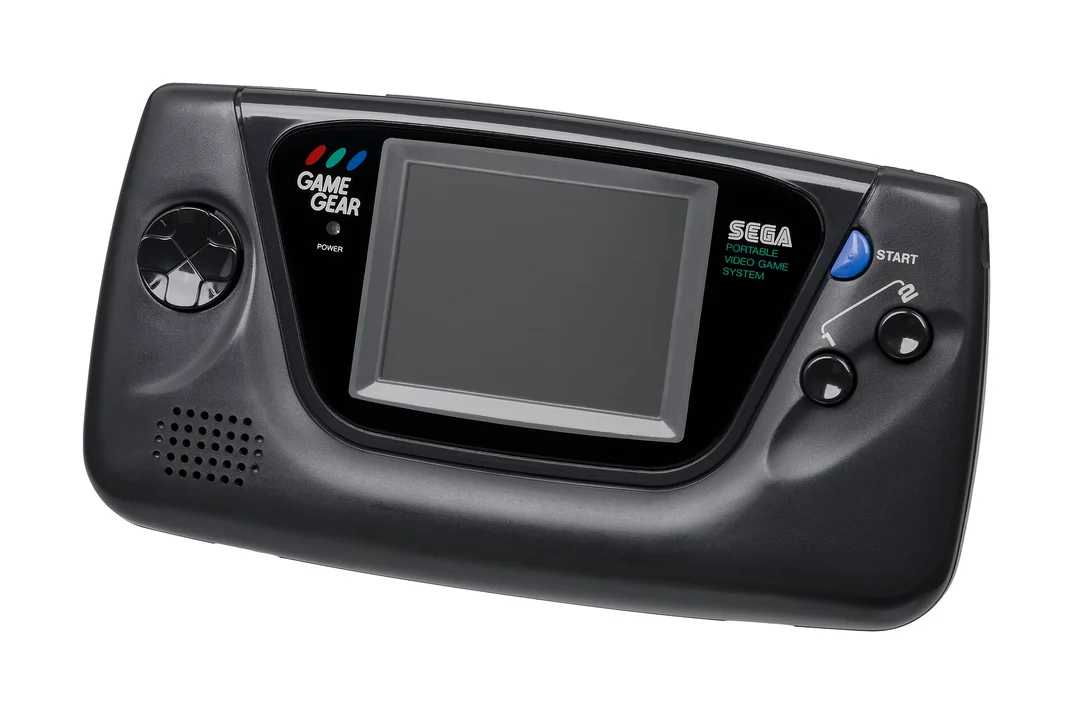
Put a launch-day Game Boy next to a Game Gear or an Atari Lynx and the Game Boy loses on looks every time. Four shades of green on a flat, reflective screen with no backlight, against the Game Gear's backlit colour LCD showing 32 colours out of a palette of 4,096. Nintendo won that generation anyway, by about ten to one.
The screen everyone looked past
The Game Boy launched in Japan on April 21, 1989, and in North America that July 31 at $89.95, with a 2.5 inch dot-matrix LCD running at 160 by 144 pixels. No backlight meant you needed a lamp or daylight to see anything, and the panel itself was prone to ghosting, trailing smears behind anything moving fast. One reviewer at the time panned the whole system over the monochrome screen and the blur.
The Game Gear, launched the following year, made the opposite bet: a proper backlit colour screen, far closer to what people expected a video game to look like. The Atari Lynx got there even earlier, in 1989, with its own backlit colour display and hardware sprite scaling that neither Nintendo nor Sega could match on paper.
Gunpei Yokoi's bet
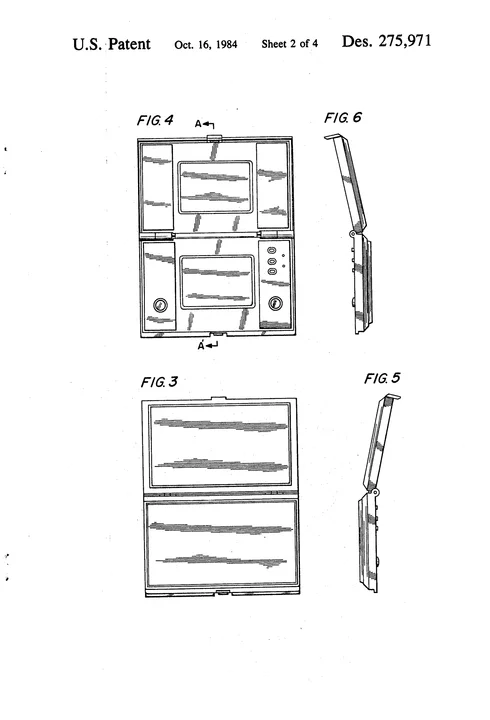
The screen wasn't an accident or a budget shortfall. Gunpei Yokoi, who'd already given Nintendo the Game & Watch line and the cross-shaped D-pad, ran the Game Boy on a philosophy he called lateral thinking with withered technology: take parts that are old and cheap and well understood, and spend the saving on making the thing actually work. Nintendo looked at a colour screen that would have added roughly ¥3,900 to the unit cost and said no, because a colour LCD of that era also meant gutting the battery life to run it.
That trade showed up immediately in the numbers. The Game Boy ran up to 30 hours on four AA batteries. The Game Gear managed three to five hours on six AAs, and the Lynx had the same reputation for chewing through batteries on a car trip. A kid with a Game Boy in the back seat could play from one end of a long drive to the other. A kid with a Game Gear needed a second pack of batteries before lunch.
Designing for four shades of green
The screen's limits became a design brief whether developers wanted one or not. High contrast reads clearly on a dot-matrix display with no backlight; fussy detail and subtle colour gradients don't, because there's no colour to begin with and the panel's low refresh makes anything delicate just smear. Tetris is the clean example: four shades of green, blocky high-contrast pieces, nothing moving fast enough to trigger the ghosting, and a rule set that needed zero colour information to read at a glance. Nintendo bundled it with the console in every region except Japan, on Henk Rogers' advice that it would sell the hardware to people who'd never buy Super Mario Land, and the bundle helped push a million Game Boys out the door in North America within weeks of launch.
Mario and Wario Land's chunky, high-contrast sprites follow the same logic: big simple shapes a dim, four-shade screen can actually render without the player squinting. Games that leaned on fine detail or fast-scrolling colour-coded information didn't translate as cleanly to the format, and that steered a generation of handheld design toward bold silhouettes over intricate art, a style that stuck around even once later Game Boy models added colour.
What losing the spec sheet actually won
None of this would have mattered if the Game Boy had been priced or distributed badly, but it wasn't. 300,000 units sold in Japan in the first two weeks, 40,000 on day one in North America. By the time Nintendo retired the line in 2003, the Game Boy family had sold 118.69 million units, roughly ten times the Game Gear's lifetime total of around 14 million. The Lynx did worse again.
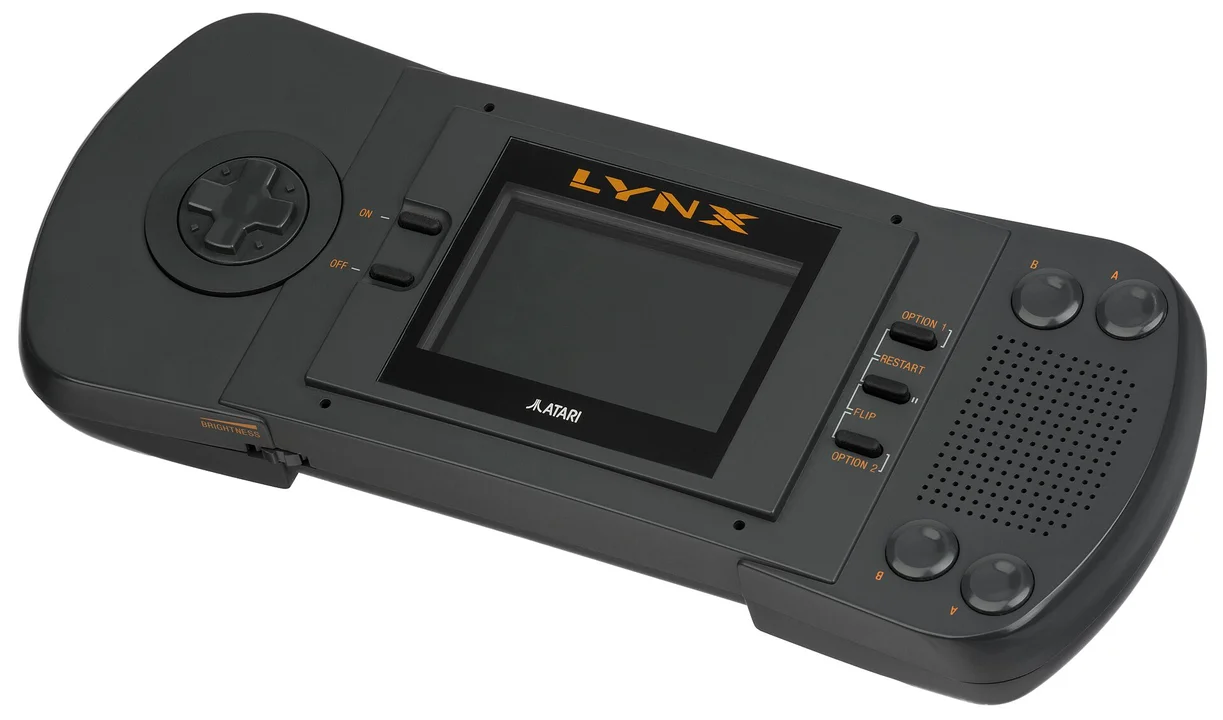
Battery life and price did the selling, not the screen. But the screen is why the games that sold it look the way they do, and why a handheld built around "what can four shades of green actually show clearly" ended up setting the house style for an entire console family.
Photo credits: Game Boy photo by Evan-Amos (public domain); Game Gear photo by Evan-Amos (public domain); Atari Lynx photo by Evan-Amos (public domain); Gunpei Yokoi's Game & Watch patent drawing for Nintendo Co., Ltd. (public domain). All sourced via Wikimedia Commons. Images are used for editorial purposes only and not for profit. If you own an image used here and have any concerns, email contact@playtopia.com.au and we'll happily credit or remove it.