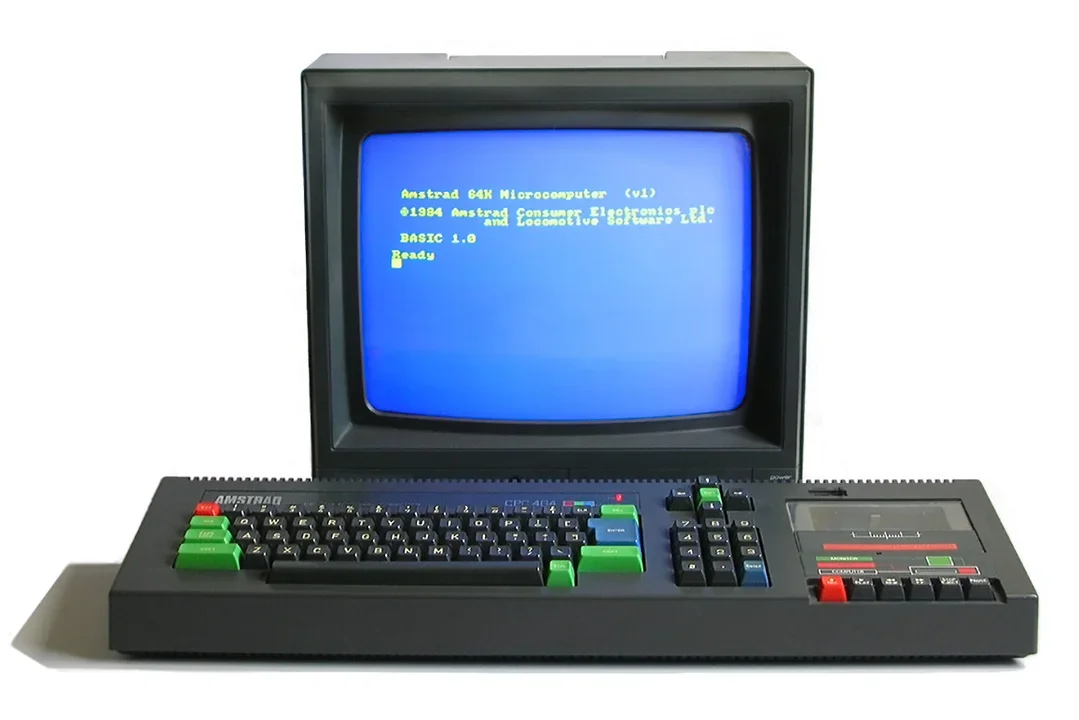
In Before Cartridges, we went back to the boxes that played one game forever and watched the cartridge slot make them clearance stock almost overnight. This time we're looking at the Amstrad, where the games didn't come on cartridges at all. They came on cassette tapes. You pressed play, went and made a Milo, and hoped for the best.
Plenty of computers loaded games off tape in the eighties. The one that made the tape deck part of the machine itself was the Amstrad CPC 464.
A real computer, not a pregnant calculator
Amstrad wasn't a computer company. It was Alan Sugar's consumer electronics company. In 1983 one of its engineers, Ivor Spital, started work on a home computer, and Sugar had firm ideas about what it should look like.
He wanted it to look like a real computer, the kind you'd see at the airport check-in desk. What he didn't want was what he called "a pregnant calculator." That was a dig at Sinclair's ZX81 and ZX Spectrum, the small rubber-keyed machines you plugged into the TV.

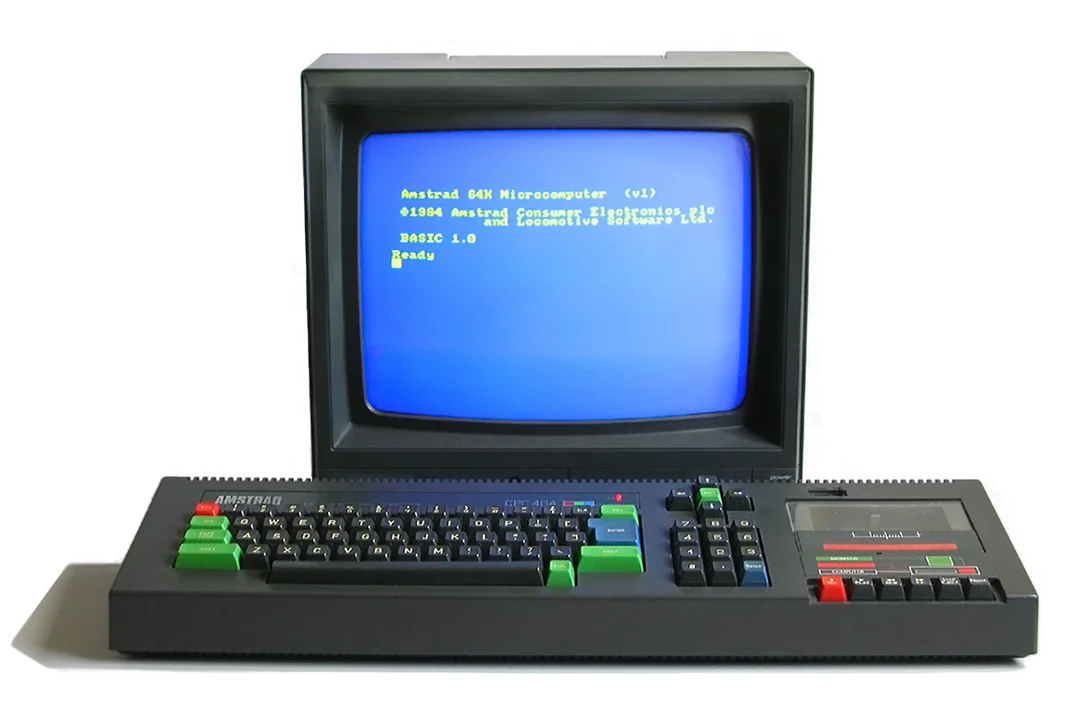
Then there was the TV itself. A home computer back then meant commandeering the family TV, and the family didn't always see it that way. Amstrad's answer was to sell the computer with its own monitor. The keyboard, the computer and a cassette deck were all one unit, and the whole lot ran off the monitor, through a single wall plug. Mum and Dad got the TV back.
Arnold, Roland and the 27 colours
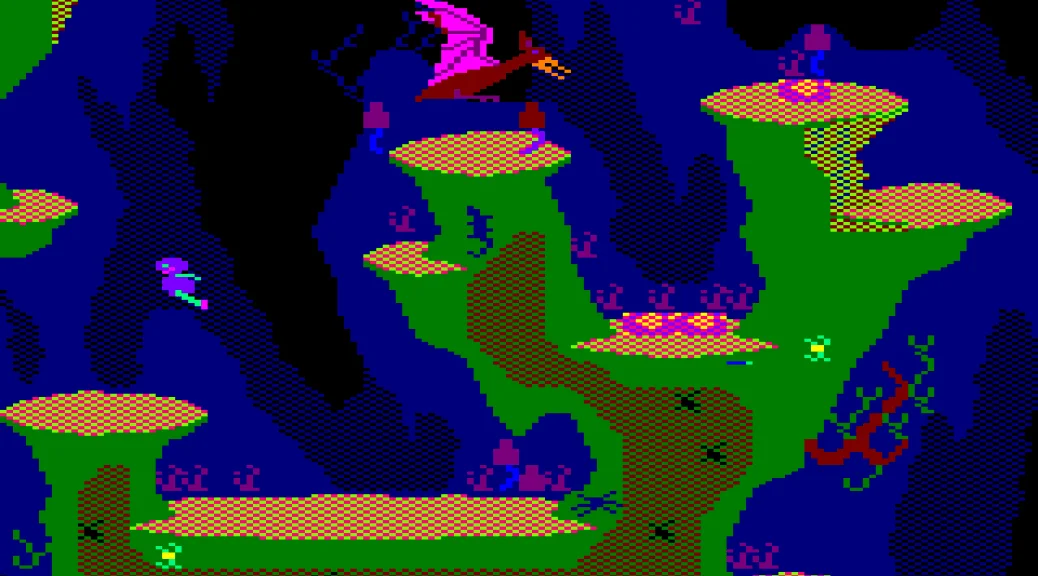
The project's codename was Arnold. One of its lead designers was Roland Perry, and his name ended up on Amsoft's games (Amstrad's own software label), which dropped a character called Roland into titles that weren't built around him, like Roland in the Caves.
The BASIC came from a small firm called Locomotive Software. It was built on work they'd just done for another machine, and reworking it for the Amstrad reportedly took around 12 weeks. Locomotive BASIC turned out to be one of the better ones of the era, which mattered on a machine you switched on straight into a programming language.
The CPC in the name stood for Colour Personal Computer. Inside was a Zilog Z80 running at 4MHz and 64KB of memory, with a palette of 27 colours.
Press PLAY then any key
The CPC 464 went on sale on 21 June 1984. In the UK it was £199 with a green-screen monitor, or £299 with colour (or $550 and $800 when it reached Australia in early 1985). If you went green, your games were green. Every one of them.
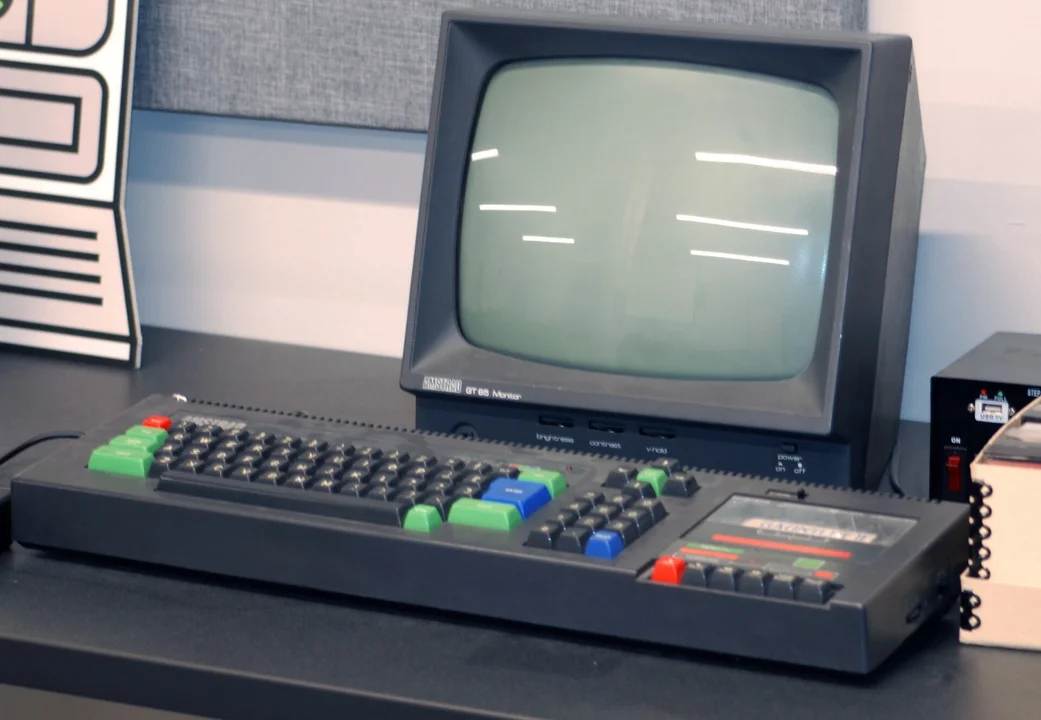
Loading a game meant typing a command, then reading the line every CPC owner knows: "Press PLAY then any key". The built-in deck took it from there. You waited through minutes of whirring, often with a loading screen to stare at, and if the tape stretched or the heads needed a clean, you rewound and tried again.
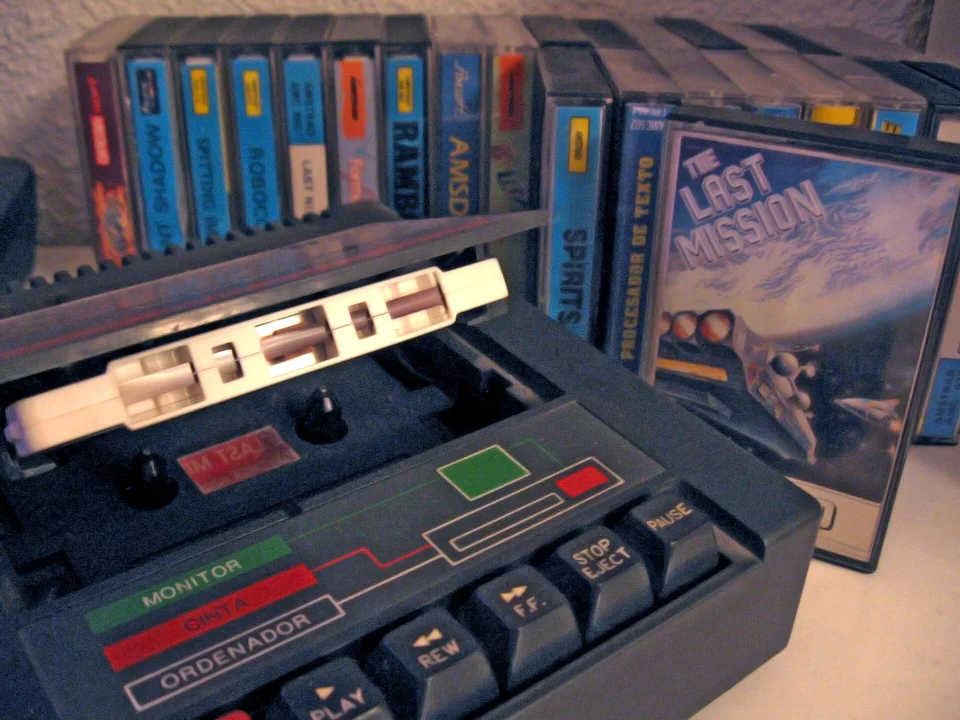
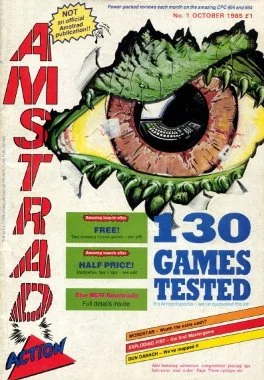
It wasn't a rare sight. The 464 sold more than two million units, mostly across Europe. It did best in the UK, France and Spain, and in the German-speaking countries it was sold as the Schneider CPC. Arcade conversions like Paperboy, Chase H.Q. and RoboCop came out on tape for it, alongside originals like Turbo Esprit, and magazines like Amstrad Action kept owners going between trips to the shops.
Disks, then cartridges
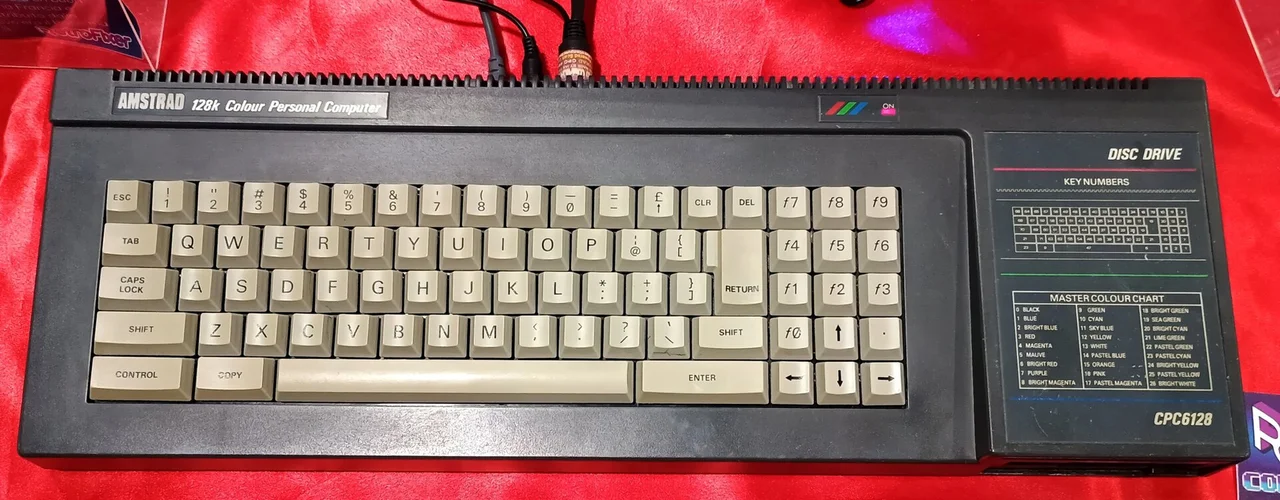
Tape didn't last forever, even at Amstrad. In April 1985 the CPC 664 swapped the cassette deck for a 3-inch floppy drive. It was gone six months later, replaced by the CPC 6128, with 128KB of memory and the same 3-inch drive. Each side of a disk held 180KB and load times went from minutes to seconds.
Then came the twist. In September 1990 Amstrad launched the Plus range and a console, the GX4000, and they took cartridges. The hardware was better too, with hardware sprites and a palette of 4096 colours. The GX4000 cost £99.99 in Britain (about $226.63 in Australian dollars at the time), and cartridges ran to about £25 each (about $56.66 in Australian dollars at the time). None of that mattered here, because the GX4000 never got an Australian release. It was only sold in Britain, France, Spain and Italy.
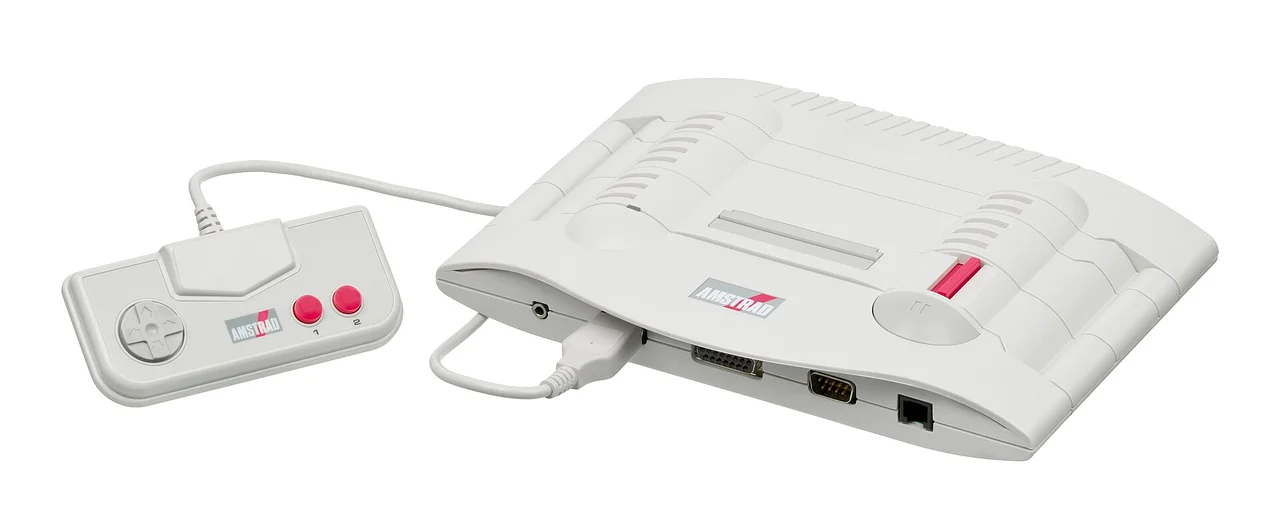
It flopped, hard. Only 27 games ever came out for the GX4000, and many were just CPC tape games moved onto cartridge with little or no improvement, but at a much higher price. Cartridges arrived slowly, and it was up against Sega's Mega Drive and Nintendo which dominated the market with quality products. It sold fewer than 15,000 units, was being cleared out for £29.99 (about $64.94 in Australian dollars at the time) by July 1991, and was discontinued the same year. The CPC range itself ended in 1990, after about three million sales.
So the company that built its computer around a tape deck got to cartridges last, a good 13 years after the Atari 2600, just as everyone was moving on. The 464 is still the one people remember more than any other: one plug, one monitor, and a cassette deck that asked you to press play.
Photo credits: CPC 464 photo by Bill Bertram (CC BY-SA 2.5); Alan Sugar photo by Damien Everett (CC BY 2.0); CPC 464 with GT65 monitor by MBlairMartin (CC BY-SA 4.0); CPC cassette deck by Manuel Bartual (CC BY-SA 2.0); CPC 6128 by A7N8X (CC0); GX4000 by Evan-Amos (public domain). All sourced via Wikimedia Commons. Images are used for editorial purposes only and not for profit. If you own an image used here and have any concerns, email contact@playtopia.com.au and we'll happily credit or remove it.