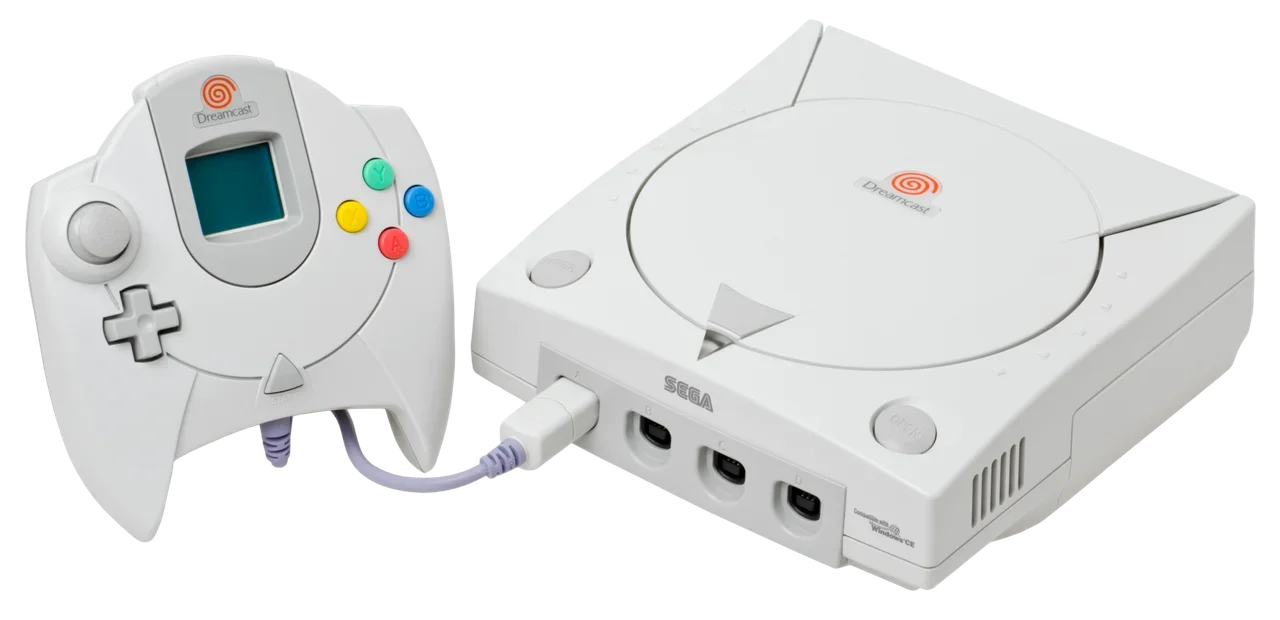
The Dreamcast went on sale in Japan on 27 November 1998. Sega stopped making it on 31 March 2001. That's under two and a half years for a console that put a modem in every box, turned the memory card into a tiny handheld, and got arcade games into peoples homes almost untouched. It was also Sega's last console. After it, Sega made games for everyone else's hardware instead.
Like a lot of people I used to hire the Dreamcast console and a couple of games from the local video store now and then, and typically with Daytona/Sega Rally to play with friends, but the first non-driving game I really played on the system was Power Stone 2 by Capcom. I wasn't a Smash Bros player at all, so the fighting game felt unique and different and drew me in far more than it otherwise would have.
Sega needed a win
By 1998 Sega was in a hole. The Saturn had been expensive to build and hard to program for, and developers drifted to the PlayStation. Sega posted its first annual loss since listing on the Tokyo Stock Exchange, then pulled the Saturn from North America early to clear the decks.
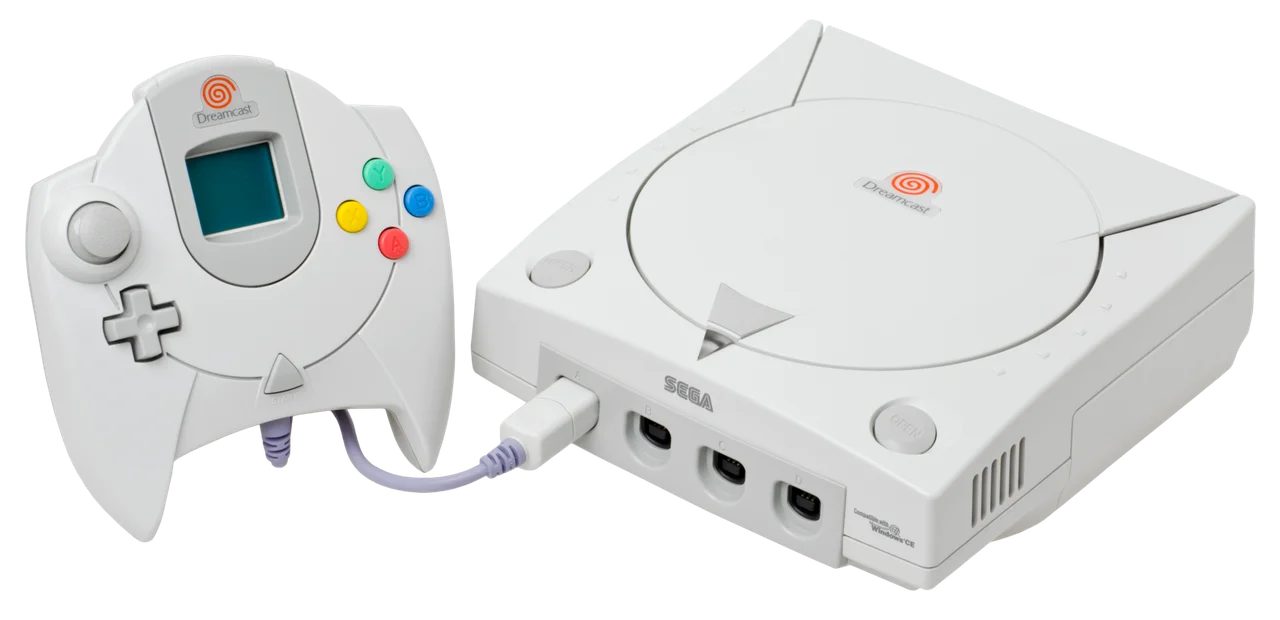
The Dreamcast was built to be the opposite of the Saturn. A team led by Hideki Sato picked off-the-shelf parts: a Hitachi SH-4 processor and NEC's PowerVR2 graphics chip. The same hardware family ran Sega's NAOMI arcade board, so arcade games could come home without being cut down. Games shipped on a Sega and Yamaha format called GD-ROM, which cost about the same to press as a normal CD.
Fun fact: Sega ran a public competition to name it and sifted more than 5,000 entries before settling on "Dreamcast", a mash of dream and broadcast. The startup sound was written by Ryuichi Sakamoto.
A modem in the box
Every Dreamcast shipped with a modem. That made it the first console with one built in (something all but useless in Australia at that time, at least around the holiday town where I grew up). Sega's chairman, Isao Okawa, signed off on it even though his own staff pushed back over the extra US$15 a unit. The modem was a separate module, so it could be swapped as home internet changed.
Sonic Team's first online experiment was ChuChu Rocket!. What they learnt went into Phantasy Star Online in 2000, the first online RPG on a console that actually took off. Up to four players could run quests together over dial-up. Japanese internet was charged by the minute back then, so Okawa paid for free access for Japanese Dreamcast owners out of his own pocket(!).
A memory card with a screen
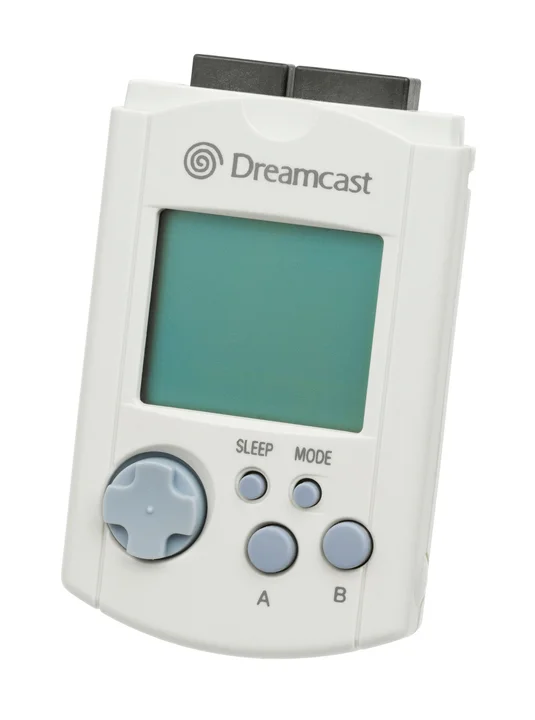
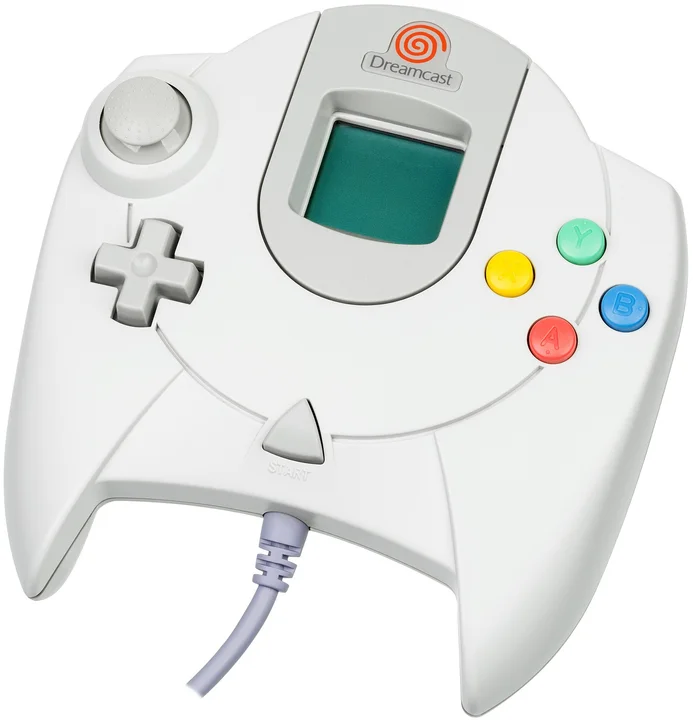
The VMU plugged into the controller like any memory card. It also had a little black and white screen that showed extra info during games, a d-pad, buttons and a speaker. Pull it out and you could play mini games on it, some of them downloaded from the Dreamcast itself. Two VMUs could link up for trading and multiplayer.
It held 200 blocks of saves and ran on two CR2032 watch batteries. When those went flat it still saved games fine, but it beeped at you every time the console switched on.
How it landed in Australia
Australia got the rough end of it. Local distributor Ozisoft planned a September 1999 launch, moved it to 25 October, then missed that too. The Dreamcast finally hit shelves here on 30 November 1999 for A$499.
Launch day was a mess. Customs had held up nearly all the launch software, demo discs included, over country of origin labelling. Ozisoft only got it two days out. Six of the thirty planned games were on sale that day, and none of them were Sega's own. Consoles were short and accessories were missing too. The internet deal with Telstra was only signed the day before launch, and online play didn't work here until March 2000. Owners had to post in a reply-paid card to get the software. Two big retail chains reported 13 consoles sold between them over the first few days. In fact, my own Dreamcast was bought 2nd hand from a video rental store for $300 and came with 12 games less than 2 years after launch.
Why it didn't last
America went the other way. The US launch on 9 September 1999 was pitched as "9/9/99 for $199" and sold more than 225,000 units in 24 hours. It had passed a million by early November.
The trouble started before that. Sony revealed the PlayStation 2 in March 1999, with DVD and backwards compatibility, and plenty of people decided to wait for it. Electronic Arts, the biggest third-party publisher of the day, refused to make Dreamcast games, so there was no Madden or FIFA. Sega's own sports games from Visual Concepts filled the gap, but the losses kept stacking up. Price cuts and rebates only made them worse.
On 31 January 2001 Sega announced it would stop making the Dreamcast after March and become a third-party publisher. About 9.13 million were sold worldwide. Okawa died on 16 March 2001. Shortly before, he forgave Sega the money he'd lent it and handed back his Sega and CSK shares, which helped the company get through the change.
The games still worth digging out
Sonic Adventure, Soulcalibur and NFL 2K were the big launch games in the US. Crazy Taxi and Jet Set Radio are the two that turn up on nearly every best-of list since. In Japan, the first real hit was Seaman, the odd little game where you raise a fish with a man's face.
Yu Suzuki's Shenmue was the most expensive game ever made at the time, somewhere between US$47 and 70 million with part of Shenmue II thrown in. It let you wander a detailed slice of 1980s Yokosuka with shops that opened and closed, and it made quick-time events a thing. It sold 1.2 million copies and still lost money.
Phantasy Star Online lost its last official servers in 2010, but fans keep it running on private servers. The homebrew scene is still putting out new Dreamcast software too.
Sadly there's not many reason to dig out a Dreamcast these days, but if I did, I would be heading straight for a title that is quintessentially 'Sega arcade'; Virtual-On. The epic dual-joystick arcade mech battle that never got a memorable showing on consoles still holds a place in my heart from playing it over and over and over in Timezone.
Did you have one? Which game was in the drive the most? Join the discord and let us know!
Photo credits: Dreamcast console set by Evan-Amos, CC BY-SA 3.0; VMU and controller with VMU by Evan-Amos, public domain. All via Wikimedia Commons.