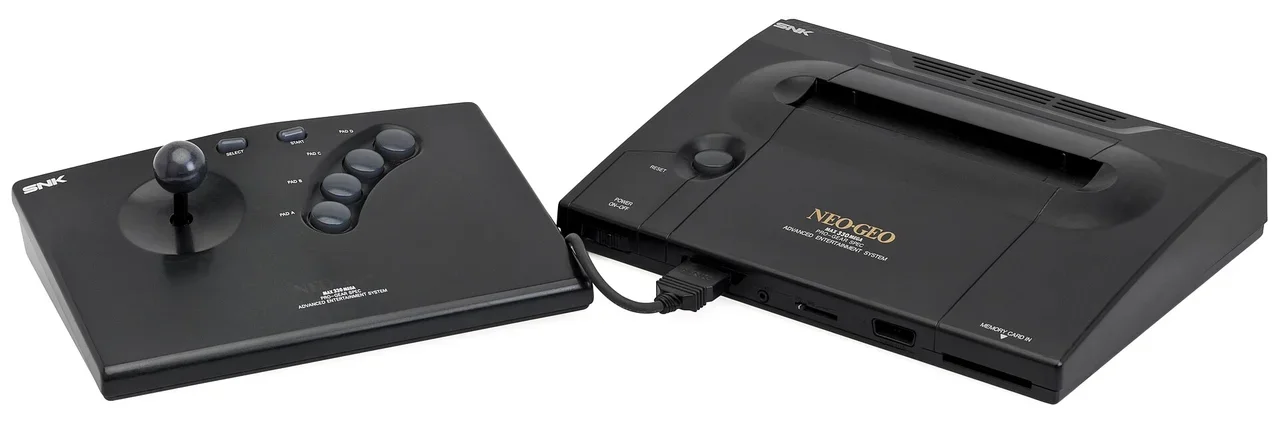
SNK didn't build a cheaper version of its arcade hardware for the home. It just put the actual arcade board in a console case and sold that, at a price that made it the most expensive home system anyone had released up to that point. If you wanted to play Metal Slug or Fatal Fury at home exactly the way the arcade down the road ran it, this was the only way to do it, and it was going to cost you.
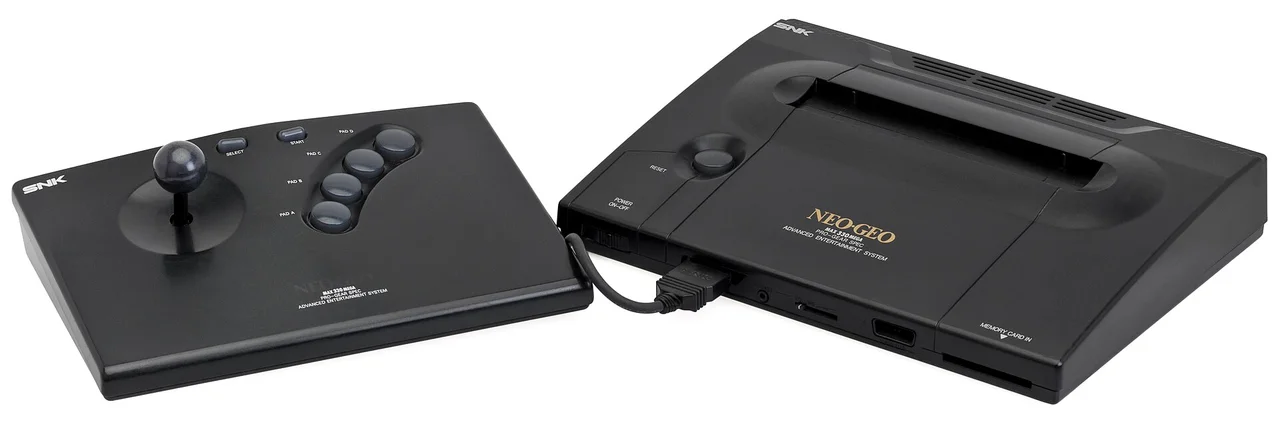
Arcade hardware, home price tag
The Neo Geo launched in Japan on April 26, 1990 as the MVS, built around a 12 MHz Motorola 68000 main CPU with a 4 MHz Zilog Z80 handling sound. SNK wasn't shy about what the home AES actually was: arcade hardware, repackaged. That's what let it run games identical to the arcade in the first place. No porting, no cut corners, no "the home version runs a bit worse." It's also why it cost so damn much. SNK wasn't paying to build a cheaper chipset for the lounge room. It was selling you real McCoy.
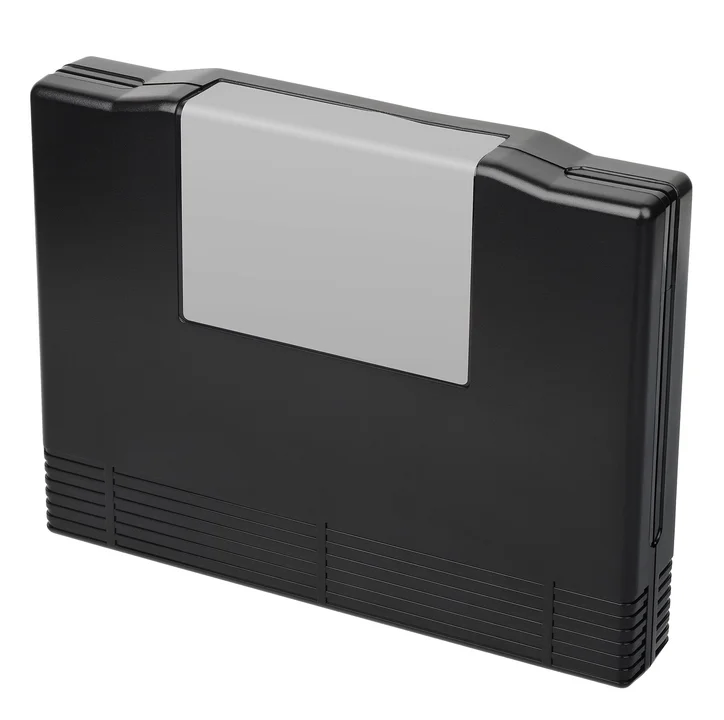
When SNK brought the AES to North America on July 1, 1991, it went out the door at $649.99, something like $1,536 in today's money. Cartridges weren't any kinder to the wallet: around $200 and up at launch, and they were physically some of the biggest cartridges ever sold at retail, because that's what it took to hold the same data the arcade board was reading.
What that meant in Australian dollars
Those are American prices, and nobody in Australia was paying American prices. In July 1991 the Aussie dollar bought about 78 US cents, so a straight conversion comes to roughly A$836. The Silver System, US$399.99 with one controller and no game, works out at about A$514, and every US$199.99 cartridge at about A$257. That's before freight, importer's margins or the wholesale sales tax of the day, and anyone bringing one in was adding all three.
Put all that together and those numbers get properly silly. A$836 in 1991 is about A$2,075 today. The Silver System is about A$1,277. A single cartridge is about A$640, which is five-odd brand new releases at today's prices, for one game.
SNK didn't even plan to sell it to you at first
Before it was ever something you could walk into a shop and buy, the AES was a rental-only proposition. SNK placed it with hotel chains, bars and restaurants, the kind of venues that could justify a $650 machine as an amenity rather than a toy. It was only once it was clear people actually wanted to own one outright that SNK expanded into proper home retail in 1991. For a lot of players in that early window, a hotel lounge or a bar was genuinely where you first touched a Neo Geo, not a mate's lounge room.
Never sold here, but impossible to miss
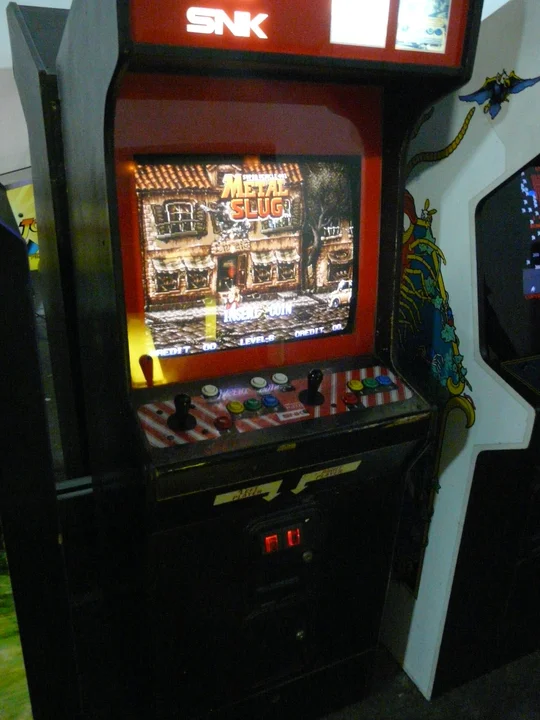
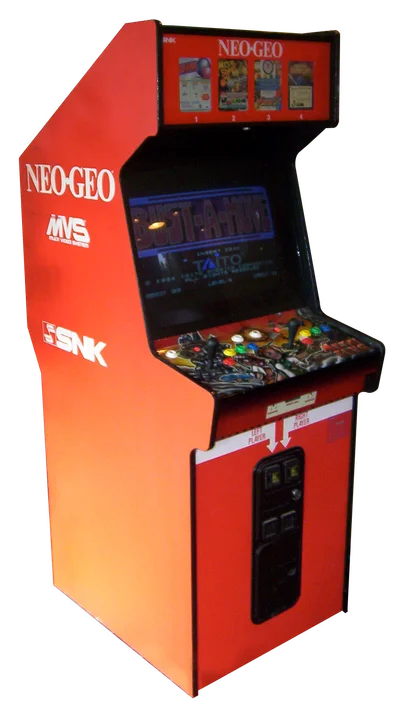
The AES was never officially released in Australia. No local distributor, no Australian box, no spot in the Christmas catalogues. The arcade version was a different story. The MVS reached Australian arcades in August 1990 and those bright red cabinets turned up everywhere. For most Australians, that red cabinet was the Neo Geo.
Getting one home meant importing it. A Japanese or American unit needed a step-down transformer for our 240-volt power and a TV that would take an NTSC picture, or you went hunting for a European PAL machine. Most of what Aussie players knew about the console came second hand too, from imported US magazines like EGM, whose February 1992 issue carried a whole Neo Geo supplement called "Bigger, Badder, Better".
A library that didn't need to apologise for anything
What justified the entire project and product line was the software. Fatal Fury, King of Fighters, Samurai Shodown and Metal Slug all started life as SNK arcade hits and arrived on the AES without having to be cut down at all. The MVS cabinet itself, sold to arcade operators in 1, 2, 4 and 6 slot versions, let a single machine swap between cartridges, which is part of why these games were everywhere in arcades even as the home version stayed a rich kid's system.
Niche then, collectable now
None of this made the AES a mainstream success. Worldwide lifetime sales landed around 410,000 units, a rounding error next to the consoles it was competing with on store shelves. What it built instead was a cult following that's only grown since: rare cartridges now sell for well over $1,000, and the console still has an active homebrew scene putting out new games for it decades after SNK stopped making it.
Australian prices have followed the rest of the world up. Refurbished AES consoles fitted with a local power supply now go for over A$1,000 at Australian retro shops, roughly what the Silver System cost in today's money, for a machine that's 35 years old.
Thirty-five years on, a cheaper way in
SNK and Plaion announced the Neo Geo AES+ in April 2026 for the console's 35th anniversary: new hardware built on re-engineered chips rather than emulation, that plays original AES cartridges as well as new ones, with HDMI out and the original AV output kept for anyone still running a CRT. Australian pre-orders opened on Amazon at A$329.99 for the black console with an arcade stick, and A$499 for the white Anniversary Edition bundle with a memory card and a white Metal Slug cartridge. It was due on 12 November 2026, but in September Plaion pushed it back to 16 September 2027, blaming global component shortages, with prices unchanged and existing pre-orders keeping their place in the queue.
Even then, the black AES+ costs about half of what a single cartridge did in 1991, in today's dollars. That's the whole story of how far the price of owning a Neo Geo has come.
The AES never had to compromise on what it ran, because it never really stopped being the arcade board underneath. That's why it was so expensive, and why the people who did buy in rarely seem to regret it.
Photo credits: Neo Geo AES console photo by Evan-Amos (CC BY-SA 3.0); Neo Geo AES cartridge photo by Evan-Amos (public domain); Metal Slug arcade cabinet photo by Piotrus (CC BY-SA 3.0); Neo Geo MVS arcade cabinet photo by Beeblebrox (CC BY-SA 3.0). All sourced via Wikimedia Commons. Images are used for editorial purposes only and not for profit. If you own an image used here and have any concerns, email contact@playtopia.com.au and we'll happily credit or remove it.