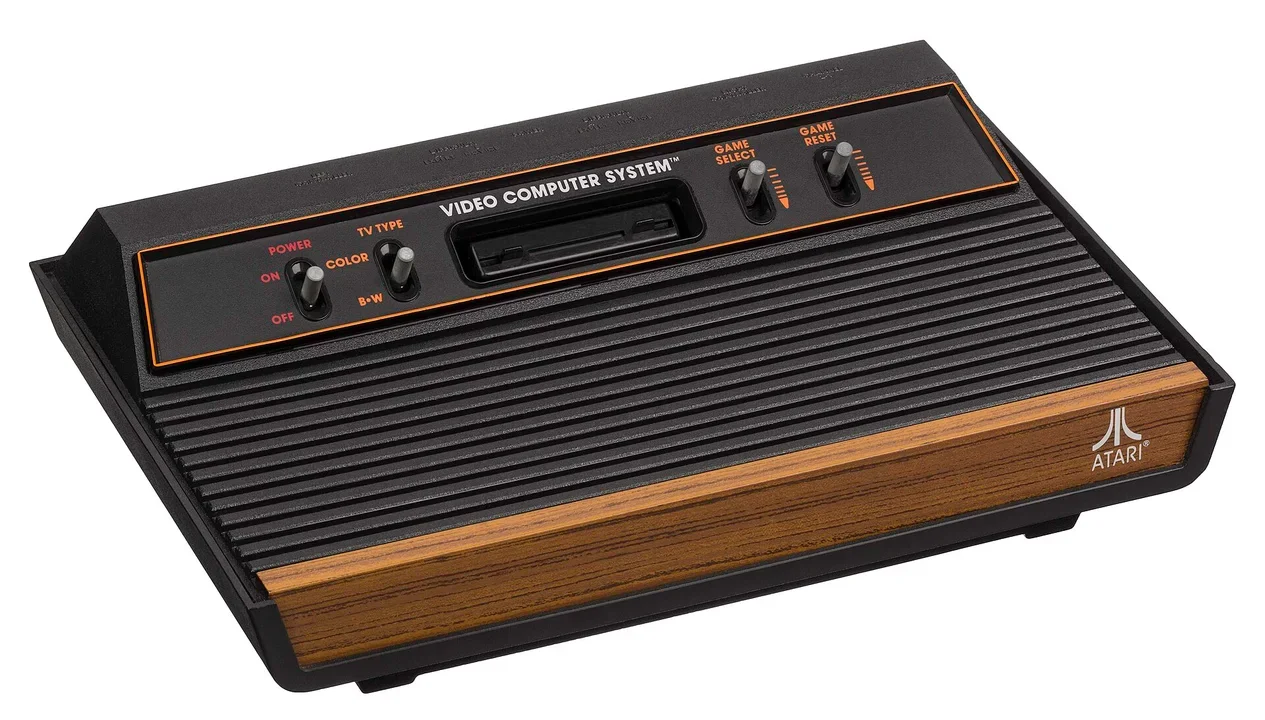
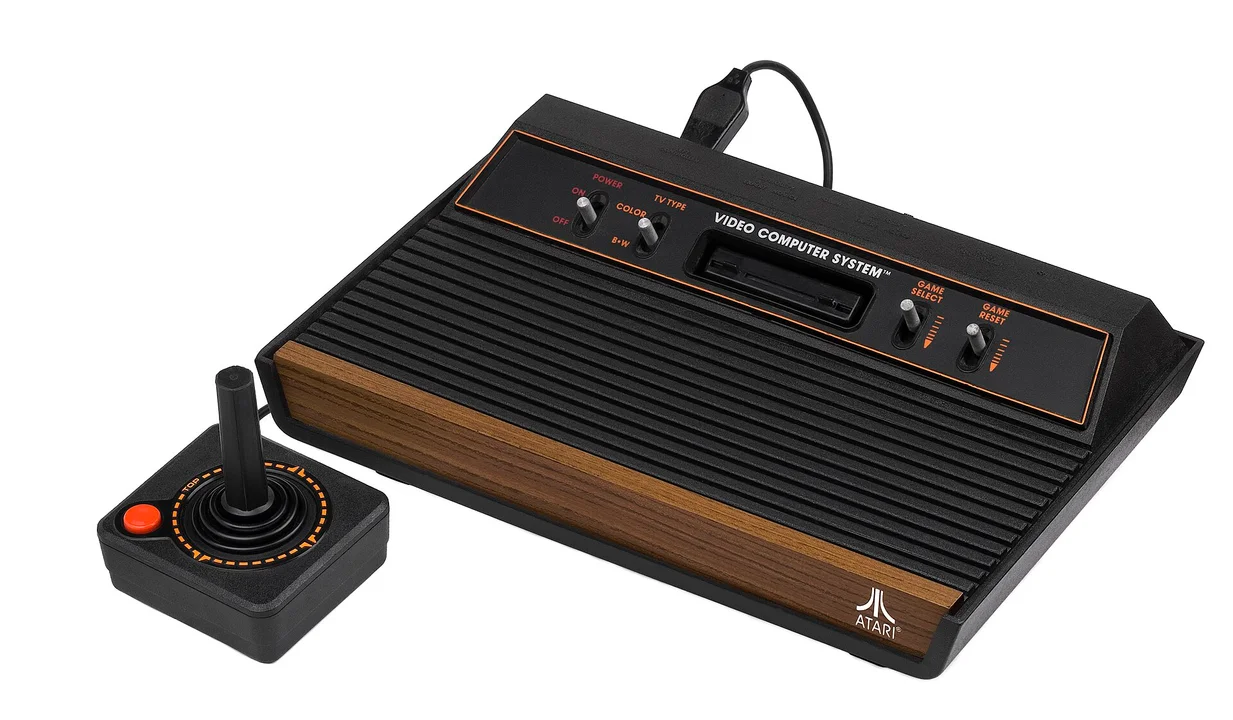
Every retro-gaming shelf in this country has one somewhere: the woodgrain box, the row of black switches along the front, a joystick with exactly one button. In Before Cartridges we looked at the one-game boxes that the cartridge slot turned into clearance stock. The 2600 is the machine that did most of that damage. It wasn't the first console with swappable cartridges, Fairchild's Channel F beat it by a year, but it's the one that made them normal. And it's the one plenty of us remember plugging into the back of the TV.
Stella, a bicycle and US$28 million
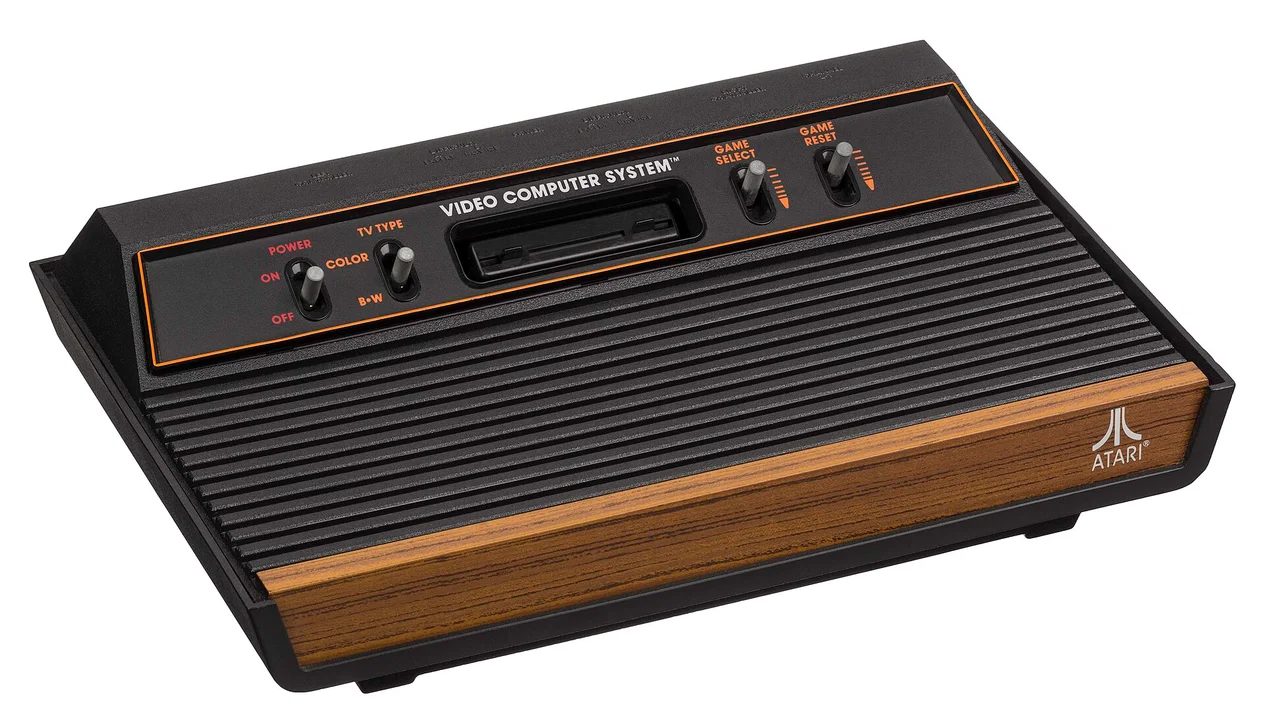
The 2600 started life at Cyan Engineering, an Atari offshoot in Grass Valley, California. Its engineers wanted a home console built around a cheap programmable chip instead of hard-wired logic, so it could play more than one game. In September 1975 MOS Technology put its new 6502 on sale for US$25. That was still too dear, so MOS offered a cut-down version, the 6507, plus its RIOT chip for input and output. Atari got the pair for US$12.
Joe Decuir joined at the end of 1975 to debug the prototype, and it took its codename, Stella, from the brand of his bicycle. Jay Miner, who'd later design the Amiga's chips, built the TIA, the custom chip that turned the game's instructions into a TV picture and sound. Atari still couldn't afford to finish the thing, so Nolan Bushnell sold the company to Warner Communications in October 1976 for US$28 million. Warner put in an estimated US$120 million more, and Stella became the Atari Video Computer System.
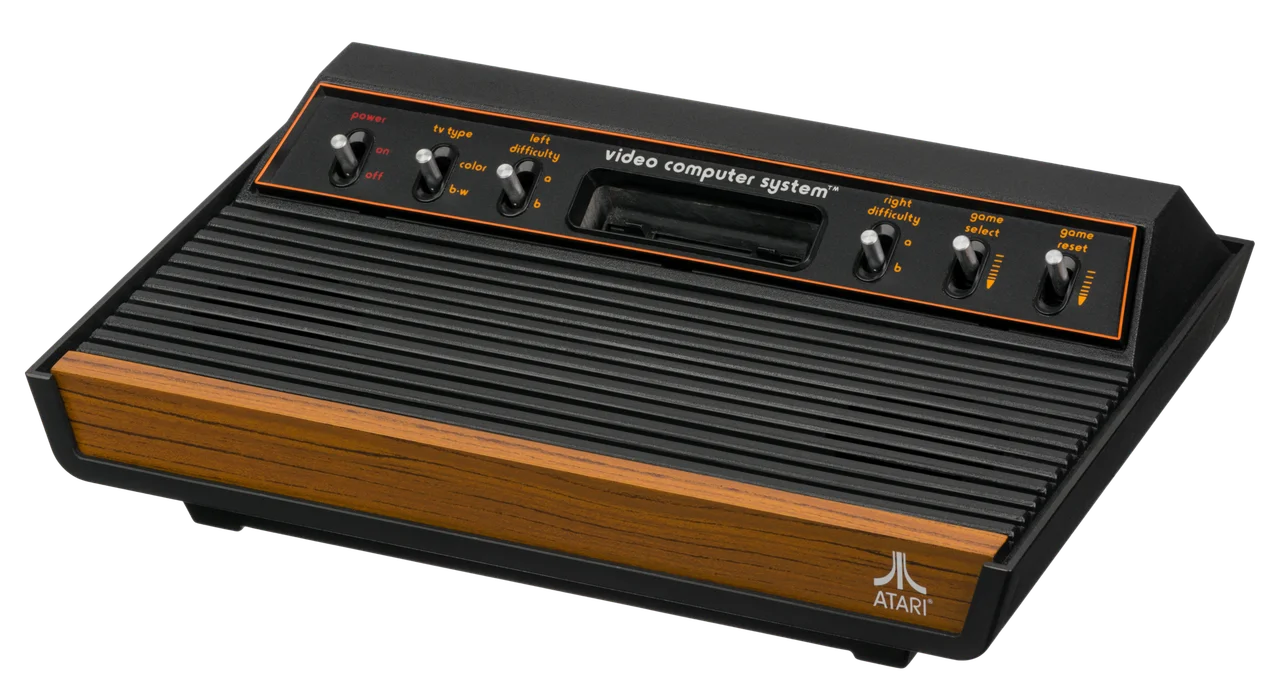
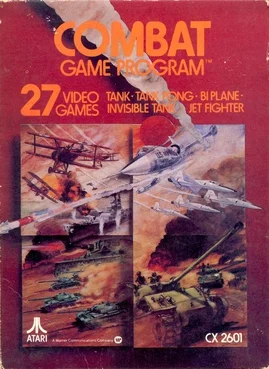
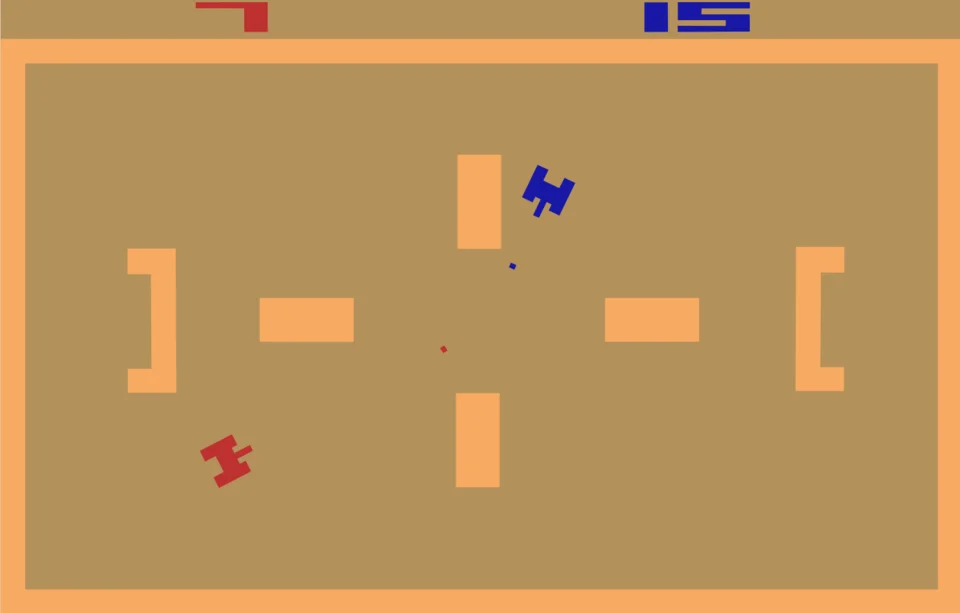
It went on sale in the US around September 1977 for US$199, with two joysticks and Combat in the box. Eight more games were sold separately, all on 2KB cartridges. It wasn't a hit straight away. Atari made 800,000 consoles in 1978 and sold 550,000. Bushnell wanted to start on a successor, Warner's board didn't, and he was gone by 1979.
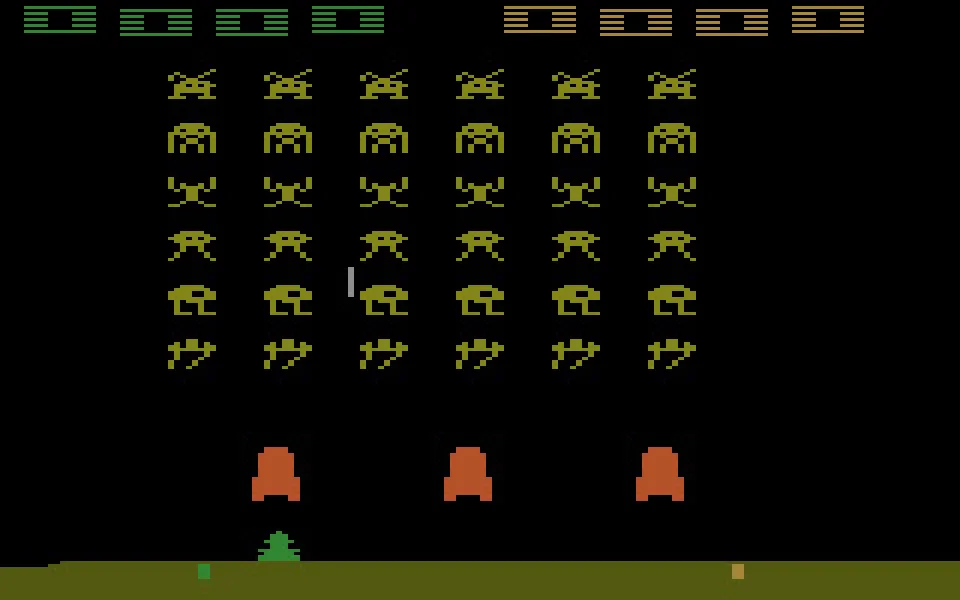
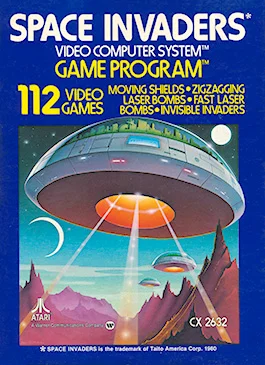
What turned it around was Space Invaders. Atari licensed Taito's arcade hit in 1980, the first officially licensed arcade conversion for a home console, and sold 1.25 million cartridges that year. Console sales passed a million in 1980 too, nearly doubling the number of VCS machines out there. In November 1982 Atari renamed it the 2600, after its CX2600 part number, to sit alongside the new 5200.
Under the woodgrain
The specs are tiny, even by 1977 standards. Most of what made the 2600 interesting came from people working out how to get around them.
| Part | What Atari put in it |
|---|---|
| CPU | MOS Technology 6507 (a cut-down 6502), about 1.19MHz |
| RAM | 128 bytes. Bytes, not kilobytes |
| Graphics | Jay Miner's TIA chip, no frame buffer |
| Resolution | 160 pixels wide; 192 lines on NTSC, 228 on our PAL sets |
| Colours | 128 on NTSC, 104 on PAL, 8 on SECAM |
| Sound | Two 1-bit channels, played through the TV |
| Cartridges | 2KB at launch, 4KB addressable, more with bank switching |
| Controllers | Joystick, paddles (two per port), driving controller |
| Launch price | US$199, September 1977 |
| Sold | About 30 million, 1977 to 1992 |
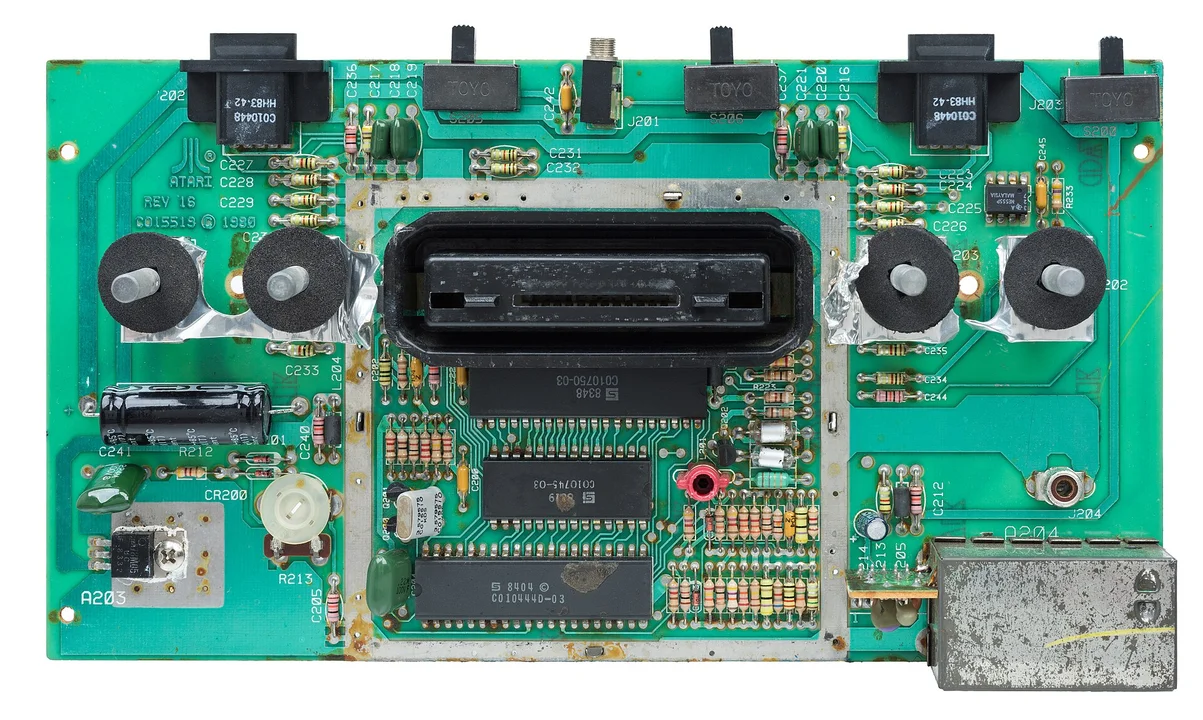
The big one is the missing frame buffer. There's no memory holding a picture of the screen. Instead the game has to feed the TIA each line of the picture just as the TV's electron beam reaches it, then squeeze the actual game logic into the moments when the beam is off the edge of the screen. Programmers called it racing the beam. On top of that, the cartridge slot could only see 4KB at a time. Combat only needed 2KB, so that seemed plenty in 1977. By 1980, starting with Asteroids, bigger games used bank switching to get 8KB or more.
Australia got the PAL version. Same 160-pixel width, but 228 visible lines instead of 192, drawn 50 times a second instead of 60, from a palette of 104 colours instead of 128. Each region needed its own version of every game. Put an American cartridge in an Australian console and you get the wrong colours and, more often than not, a picture that rolls.
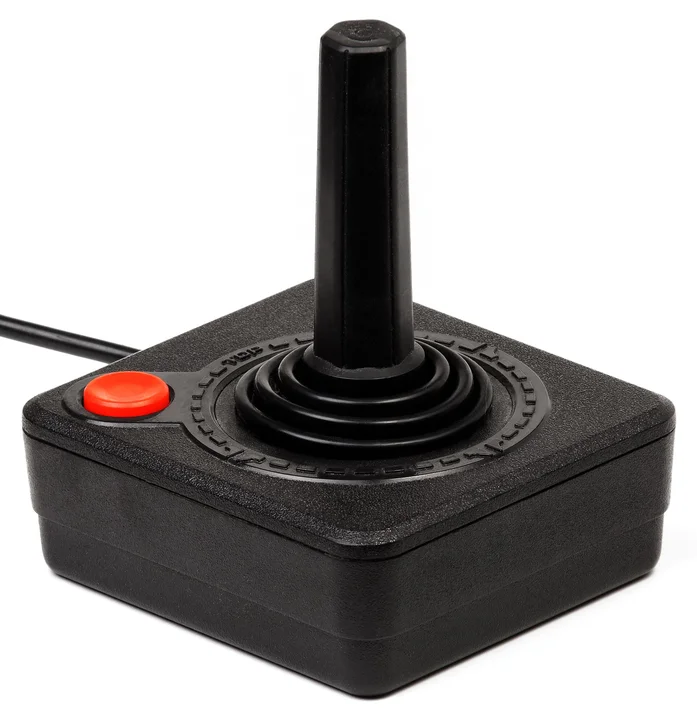
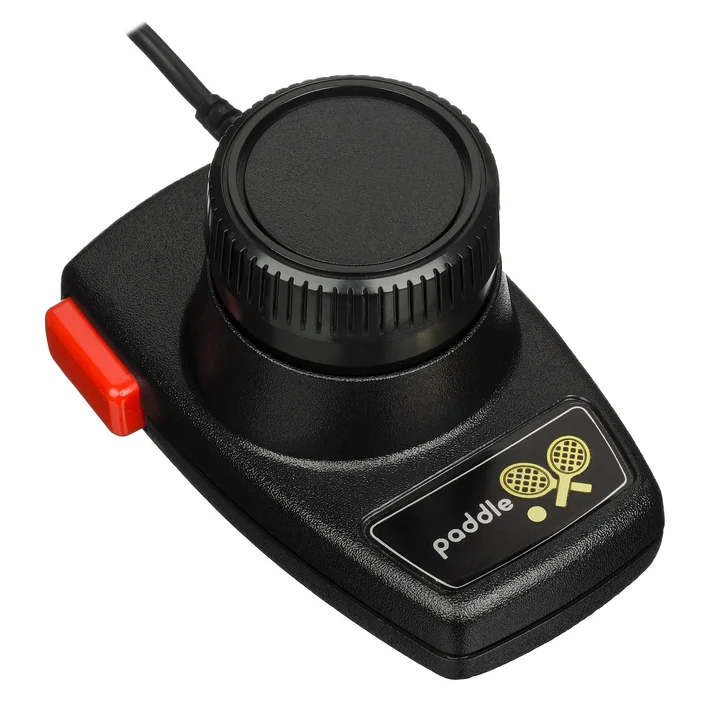
The controllers were simple too. The CX40 joystick had one button and eight directions and that was your lot. Most bundles also came with paddles: two dials on a single cable, so two players shared one port. The driving controller looked like a paddle but spun all the way round, and shipped with Indy 500.
Atari's man in Australia
Over here the 2600 came through Futuretronics, the local company that held Atari's Australian distribution, the way Ingersoll handled it in the UK and Irwin Toys in Canada. Futuretronics also brought in Atari's home computers and software, along with Wico joysticks. It didn't make it out of 1984. On 5 November the National Australia Bank appointed receiver-managers, and Atari pulled its Australian distribution rights. A month later it was reported in The Canberra Times that the Victorian Supreme Court had appointed a provisional liquidator, with the company about $20 million short.
The receiver said Jack Tramiel, who'd bought Atari's consumer business from Warner that July after leaving Commodore, had told him Atari didn't intend to let Australian customers down. Futuretronics kept servicing Atari gear and selling off its stock while Atari worked out how it would run things here in 1985.
The programmers Atari wouldn't name
Early Atari cartridges didn't credit anyone. Management kept programmers anonymous so rivals couldn't poach them, and it didn't hurt in pay negotiations either. David Crane asked Atari president Ray Kassar for credit and better pay after his games made the company a fortune. He was knocked back. In 1979 he left with Alan Miller, Bob Whitehead and Larry Kaplan and started Activision.
Atari sued in 1980. The two settled out of court, with Activision paying Atari a licence fee on its games. That made Activision the first third-party console developer, and the arrangement is basically the one Sony, Microsoft and Nintendo still use. By 1982 third parties made half of all VCS game sales, and four of the five picks below came out of Activision.
Editor's picks: five worth plugging in for
The 2600 library runs to hundreds of games and a fair whack of them aren't worth your time. These five are.
Adventure (1980)
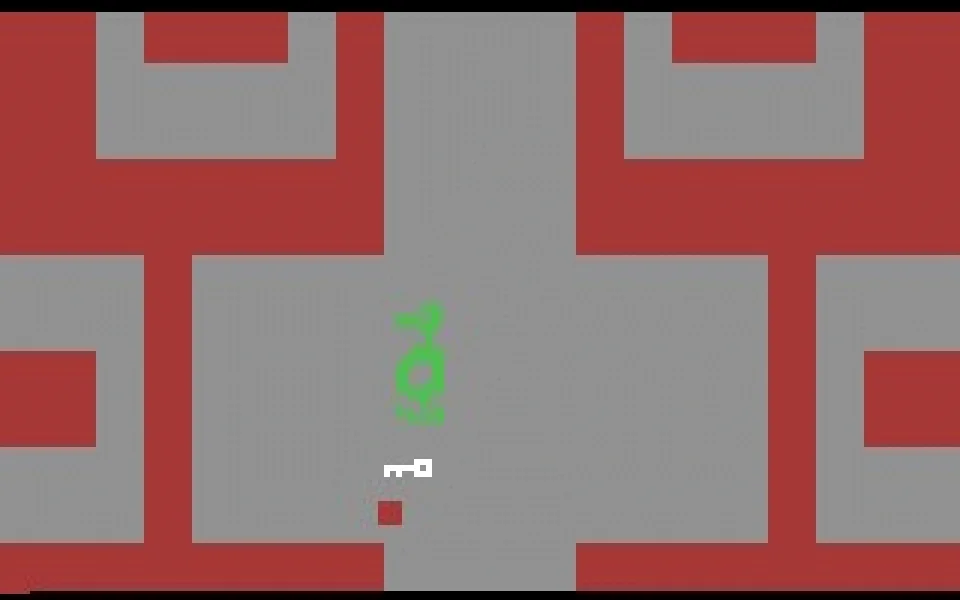
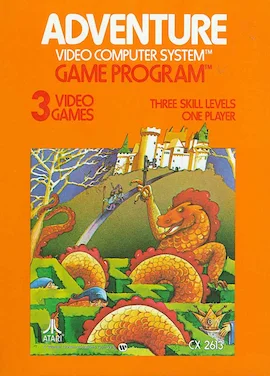
Warren Robinett played the text game Colossal Cave Adventure at Stanford and wanted to make a version you could see. His boss told him it couldn't be done on a 2600. He had a working prototype in a month. You're a square. You hunt for an enchanted chalice across 30 rooms, past three dragons called Yorgle, Grundle and Rhindle, which Robinett admitted look more like ducks. A bat flies around nicking whatever you've put down, and it keeps doing it even when it's off screen. The whole game fits in 4KB with 15 bytes to spare.
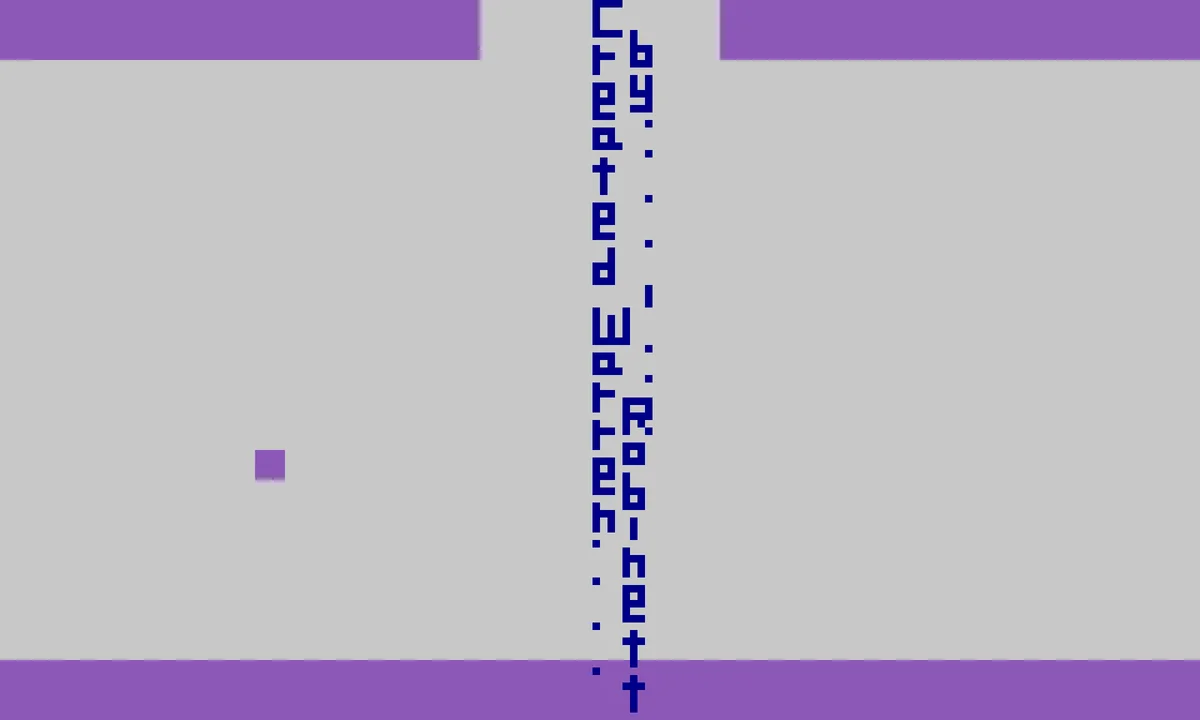
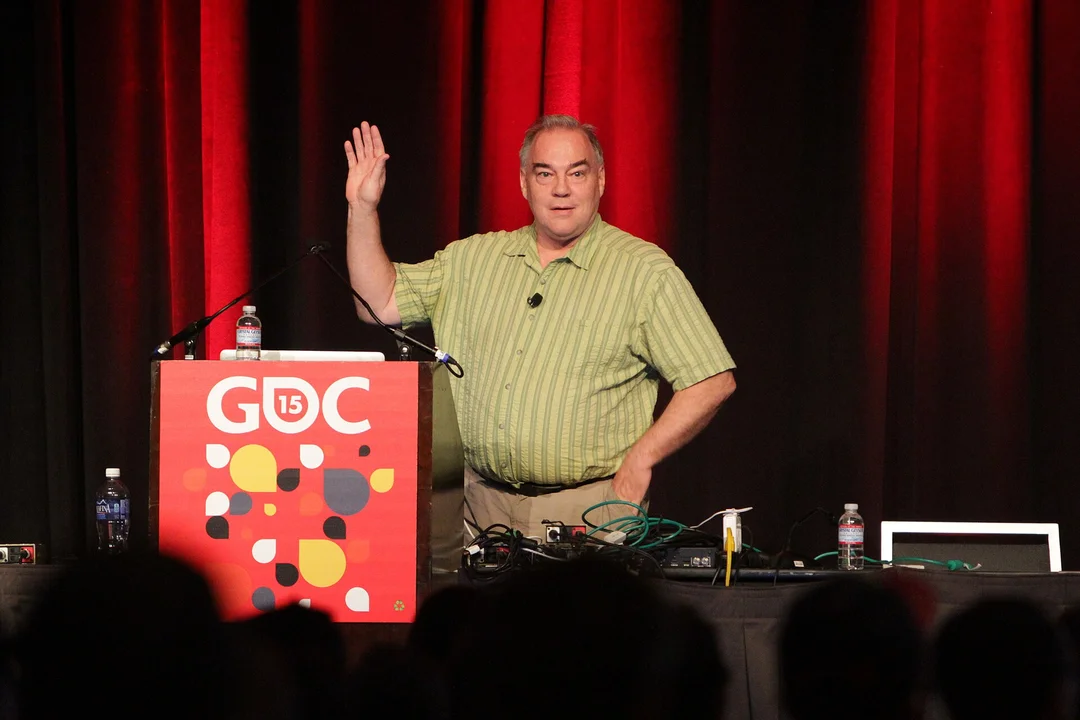
Five percent of that 4KB is a secret. Atari paid Robinett about US$22,000 a year, no royalties and no credit, while the game sold a million copies at US$25 each. So he hid a room with "Created by Warren Robinett" in it, reached by finding a one-pixel grey dot hidden in the catacombs. A 15-year-old from Salt Lake City found it after Robinett had left and wrote to Atari. Making a new chip to take it out would've cost about US$10,000, so Atari left it in, and Steve Wright in software development started calling these things Easter eggs. He made them official policy.
Pitfall! (1982)
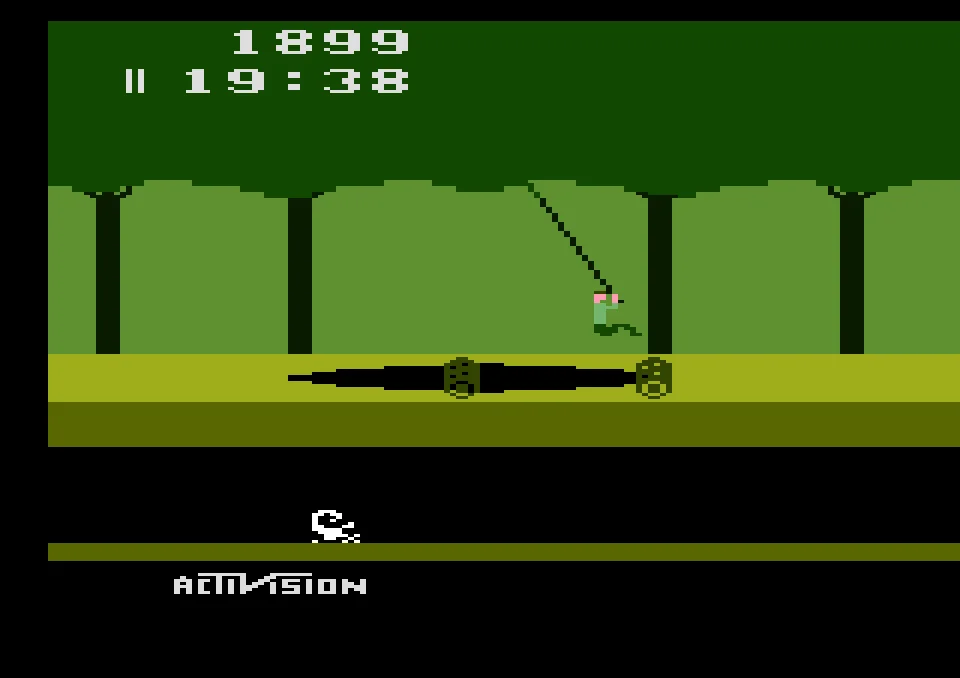
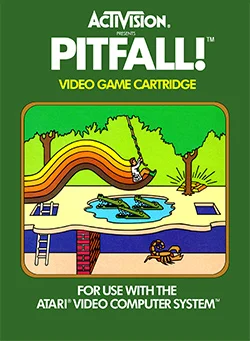
Crane spent about three years with a little running man animation and no game to put him in. In 1982 he gave him a jungle, a reason to run and a 20-minute clock, and that's Pitfall Harry. There are 255 screens and 32 treasures, with vines to swing on, scorpions, tar pits and crocodiles whose heads you can run across when their jaws are shut. That last bit came from Heckle and Jeckle cartoons. The screens aren't stored in the cartridge. A counter generates each one as you walk into it, which is how 255 screens fit into fewer than 50 bytes.
"The entire process took about 10 minutes," Crane said of the design. "About 1000 hours of programming later the game was complete." He wanted one life. His mates at Activision "practically tied me to my chair until I put in extra lives", and he was glad they did. It sat on top of Billboard's video game chart for 64 weeks straight and sold more than four million copies on the 2600. The TV ad was Jack Black's first acting job. He was 13.
River Raid (1982)
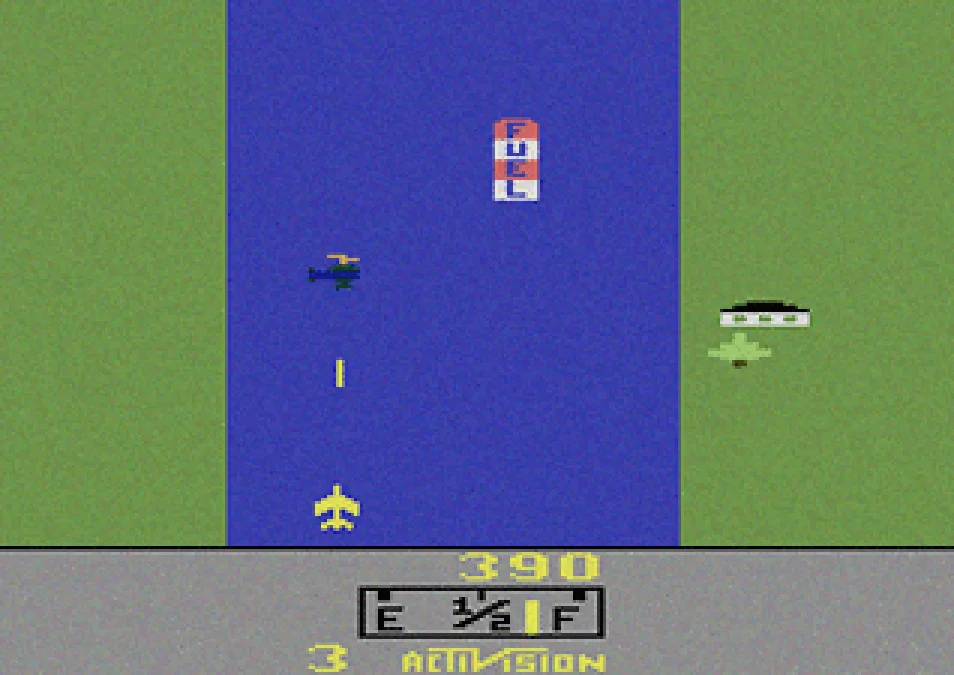
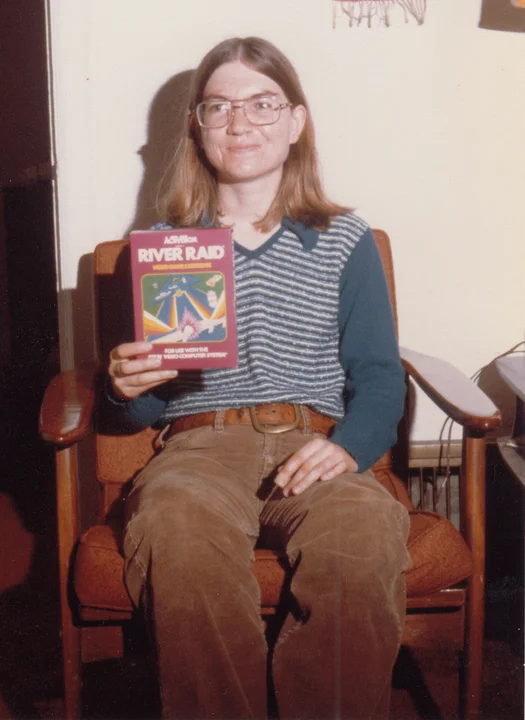
Carol Shaw, one of the first women to design video games, wanted to make something like the arcade game Scramble. Alan Miller told her there were too many space games already. Sideways scrolling looked jerky on the 2600, so she went vertical. While doodling on graph paper she noticed a mirrored layout looked like a river with islands in it. The player was going to be a boat until Crane suggested a jet. You fly up the River of No Return blowing up bridges, tankers and helicopters, and you fly low over fuel depots to fill up, because running dry ends your run as surely as hitting the bank. The low-fuel klaxon was Crane's too: he rattled off the assembly code for it from memory.
It was the second best-selling 2600 game of 1983, behind Ms. Pac-Man, and had sold nearly a million copies by January 1984. West Germany banned it for its military theme.
Keystone Kapers (1983)
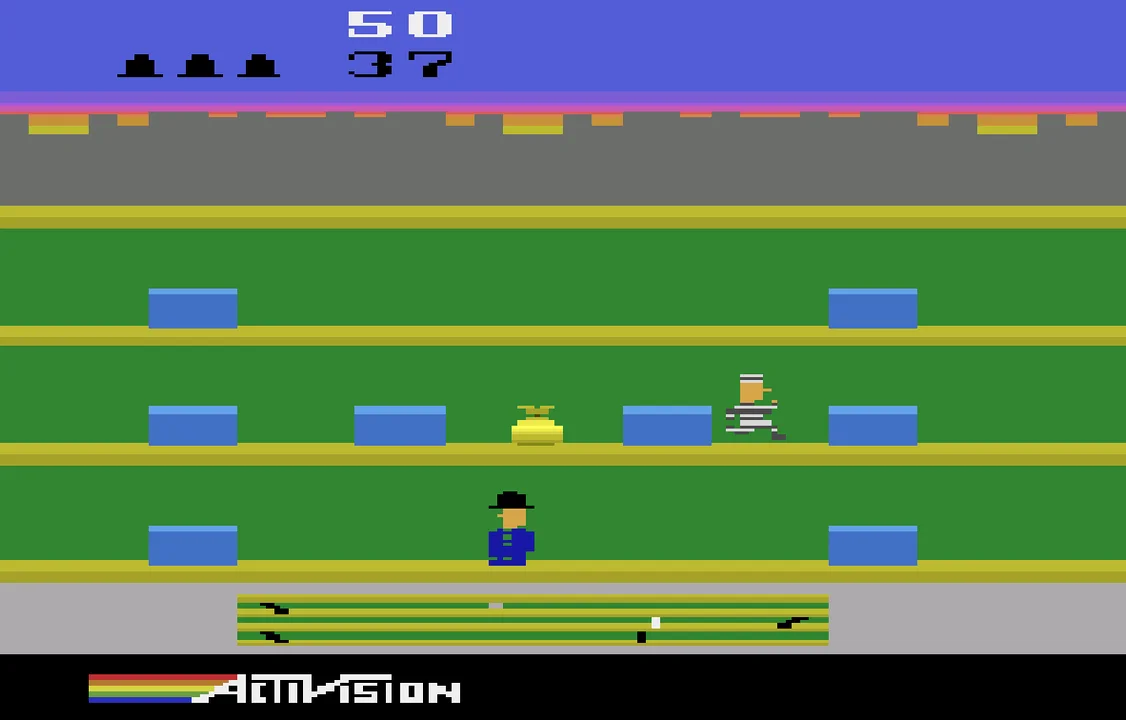
Garry Kitchen had just ported Donkey Kong to the 2600 and was, in his own words, in "little man mode". His wife suggested the Keystone Cops, and the bowler hats, blue uniforms and truncheons were things the 2600 could actually draw. You're Officer Kelly, chasing Harry Hooligan through four floors of Southwick's Emporium while jumping shopping trolleys and beach balls and ducking toy biplanes. Escalators and lifts get you between floors, and a little map at the bottom shows where you both are. It started as a vertical Donkey Kong climb until Crane suggested a sideways chase like Pitfall!. Kitchen had to cut a Model T parked out the front: "The car was beautiful, but I eventually had to remove it because it cost too many bytes."
H.E.R.O. (1984)
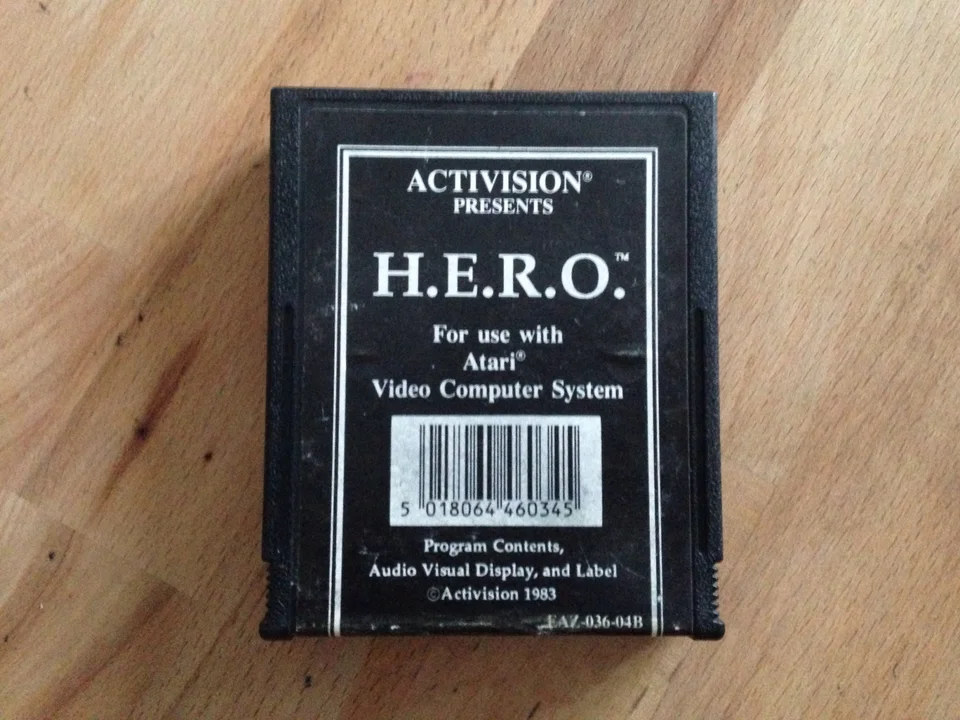
Helicopter Emergency Rescue Operation. John Van Ryzin's first game for Activision, Cosmic Commuter, got shelved because playtesters didn't think it was fun, so he started again with a cave tour he'd been on and a childhood love of Superman's heat vision. You're Roderick Hero, going down into mine shafts under Mount Leone to rescue miners trapped by volcanic activity. You've got a backpack propeller, a laser in your helmet and six sticks of dynamite per level. Brush a lantern and the lights go out. It's an 8KB cartridge, and Van Ryzin had time to fine-tune how the prop-pack handles because, as he put it, "we had no deadlines or budgets for games. It was done when it was good."
Not everyone was sold. The Fort Worth Star-Telegram reckoned that a year earlier it would've been excellent, but "this year, it's a little blah." The proper retro press has been kinder since, and it's one of the best things Activision put on the system.
More from the shelf
Highlights only. This isn't the whole library, just the ones that earn their spot.
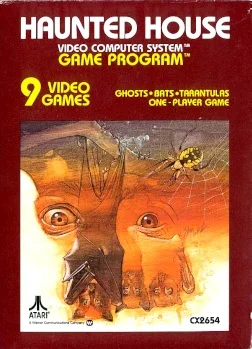
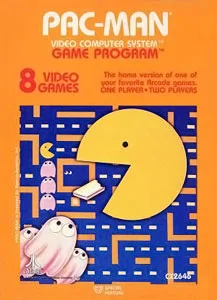
Seventeen more from the shelf, by year. Box on top, the game underneath. Swipe or scroll sideways →
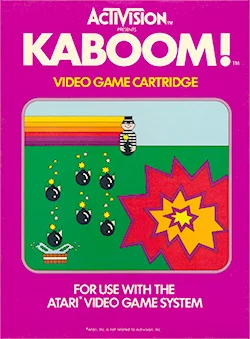
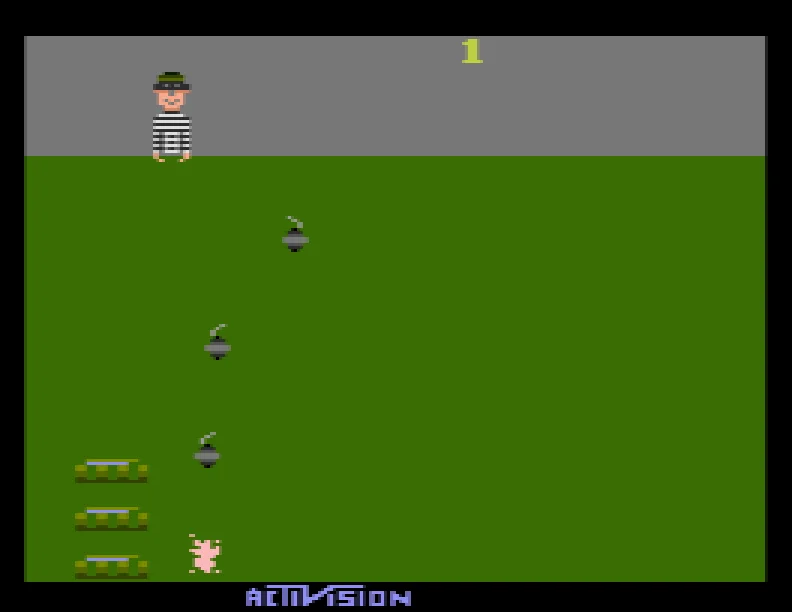
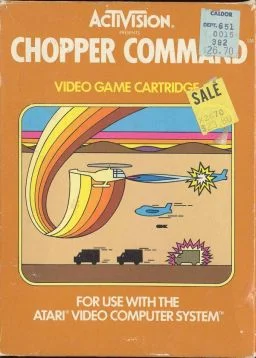
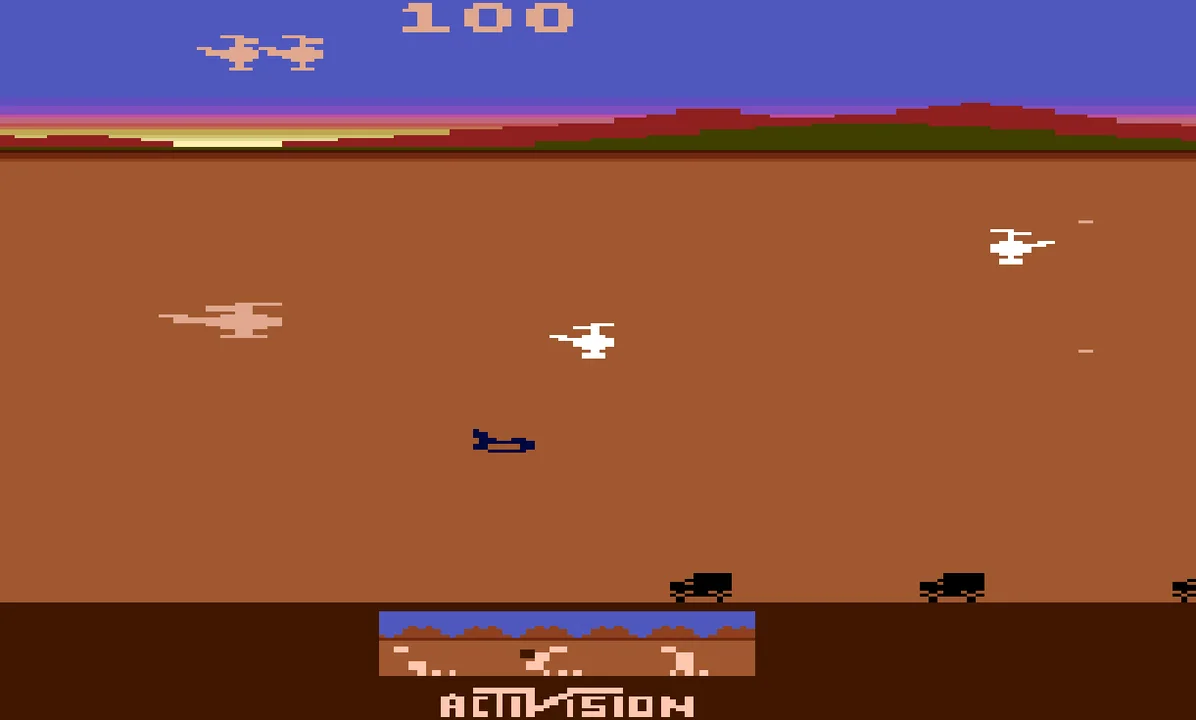
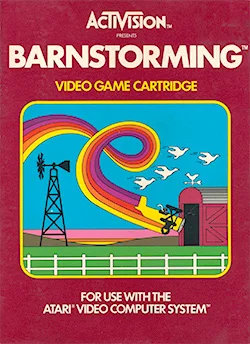
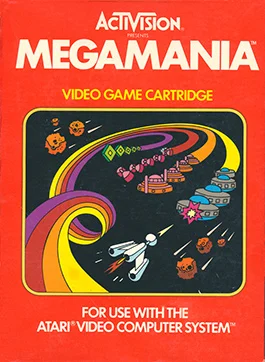
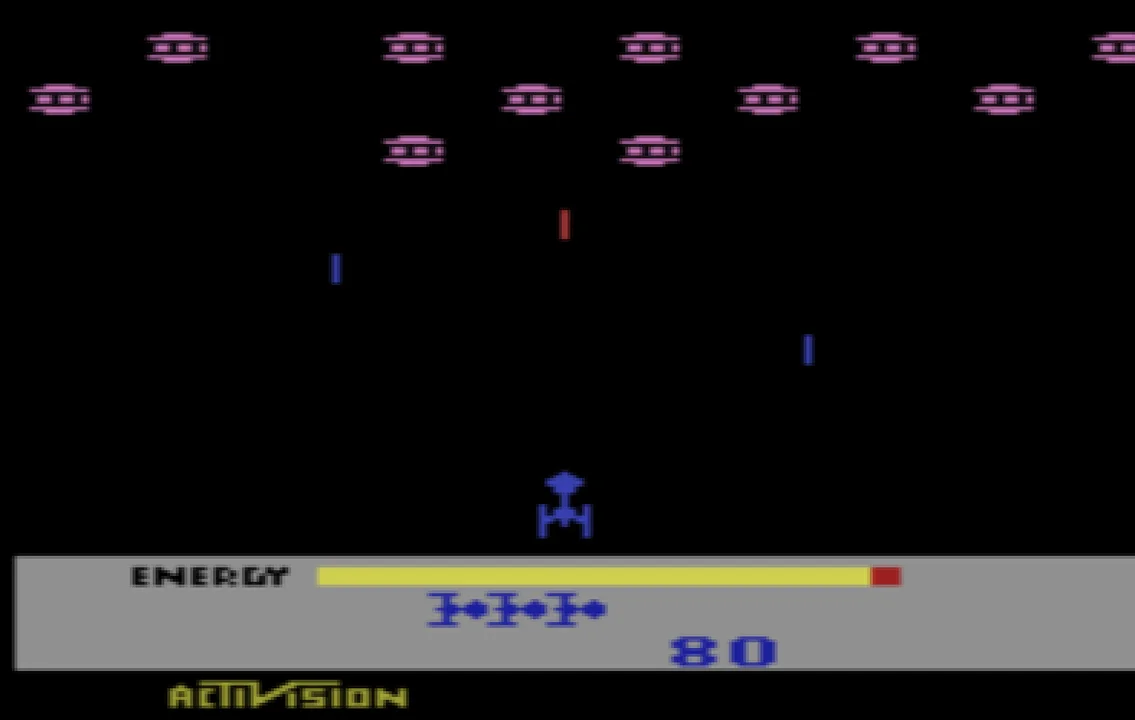
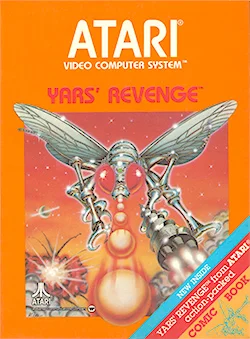
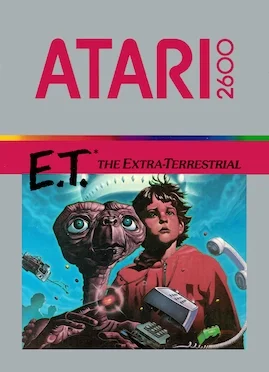
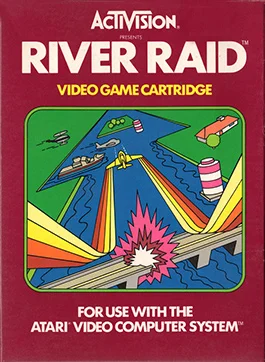
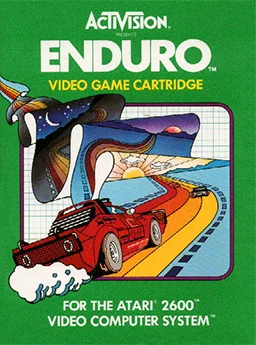
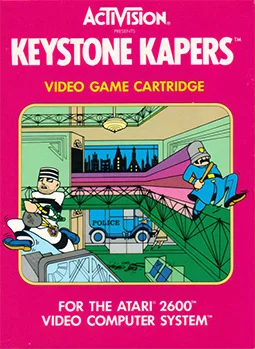
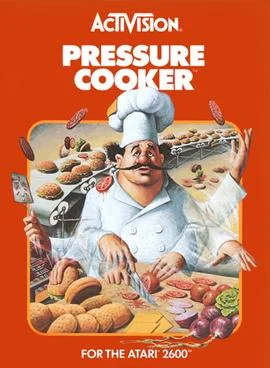
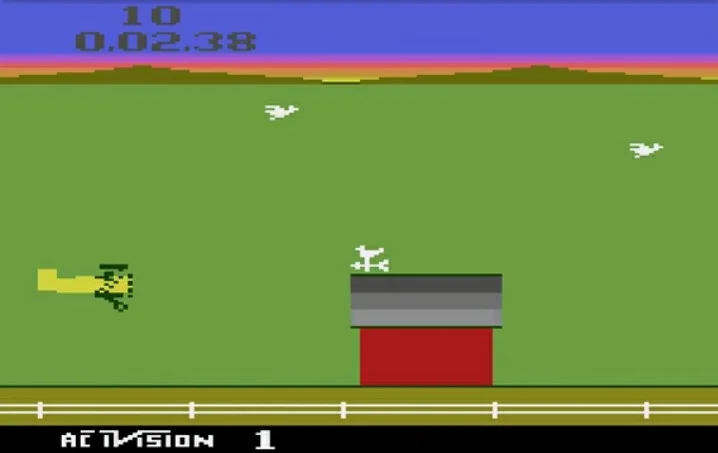
A few of those deserve more than a box. Kaboom! is the reason paddles mattered: the Mad Bomber drops bombs faster and faster and you catch them in buckets of water. Larry Kaplan programmed it and Crane drew the bomber, whose face changes depending on how you're going. It sold over a million. Barnstorming was Steve Cartwright's first game, which came to him while watching a biplane on the drive home. Fly a fast enough course and send Activision a photo of your TV, and they'd post you a Flying Aces patch.
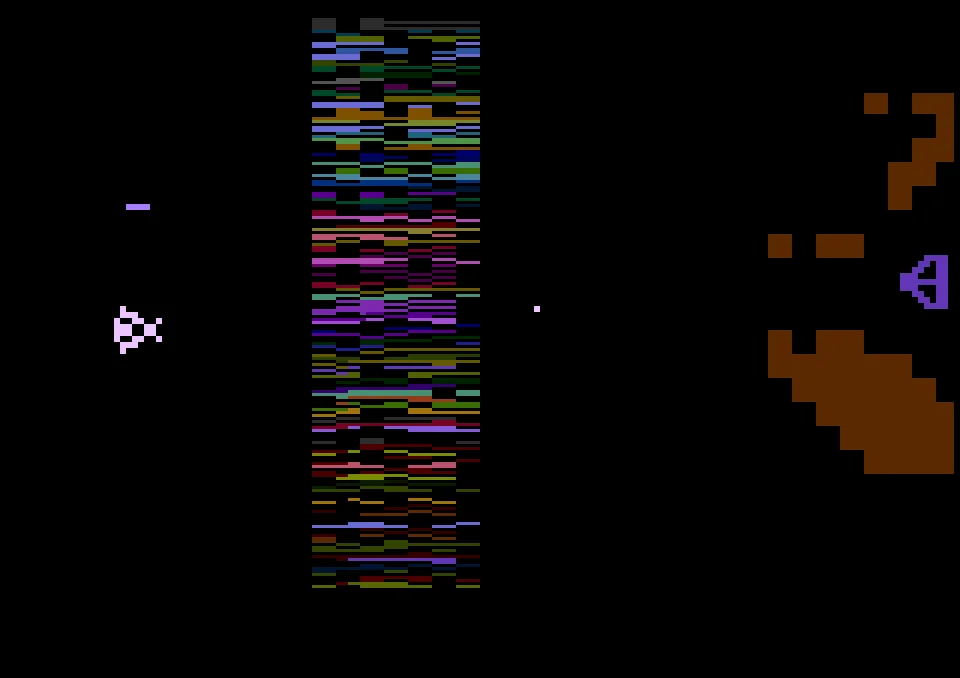
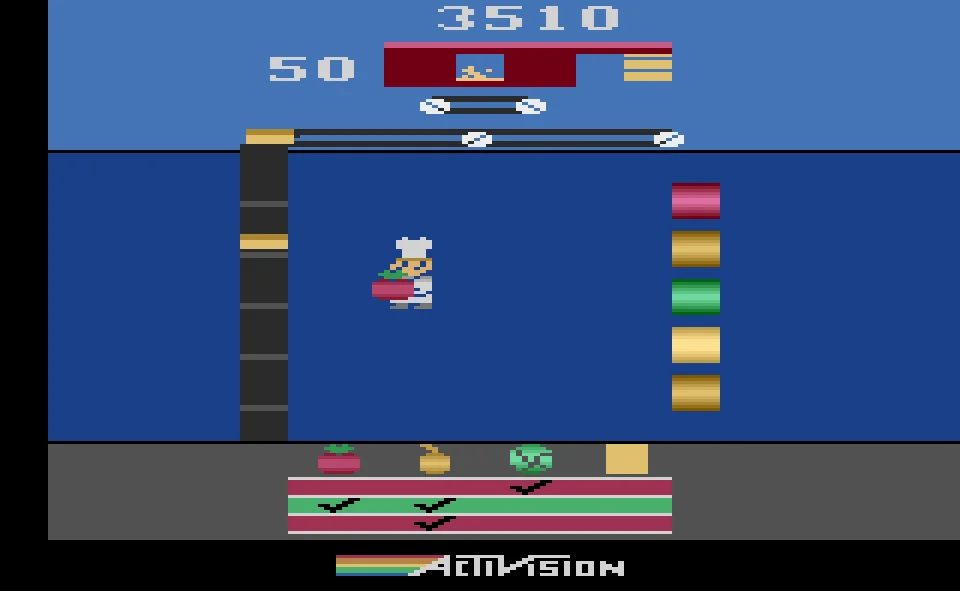
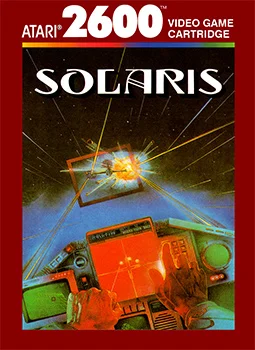
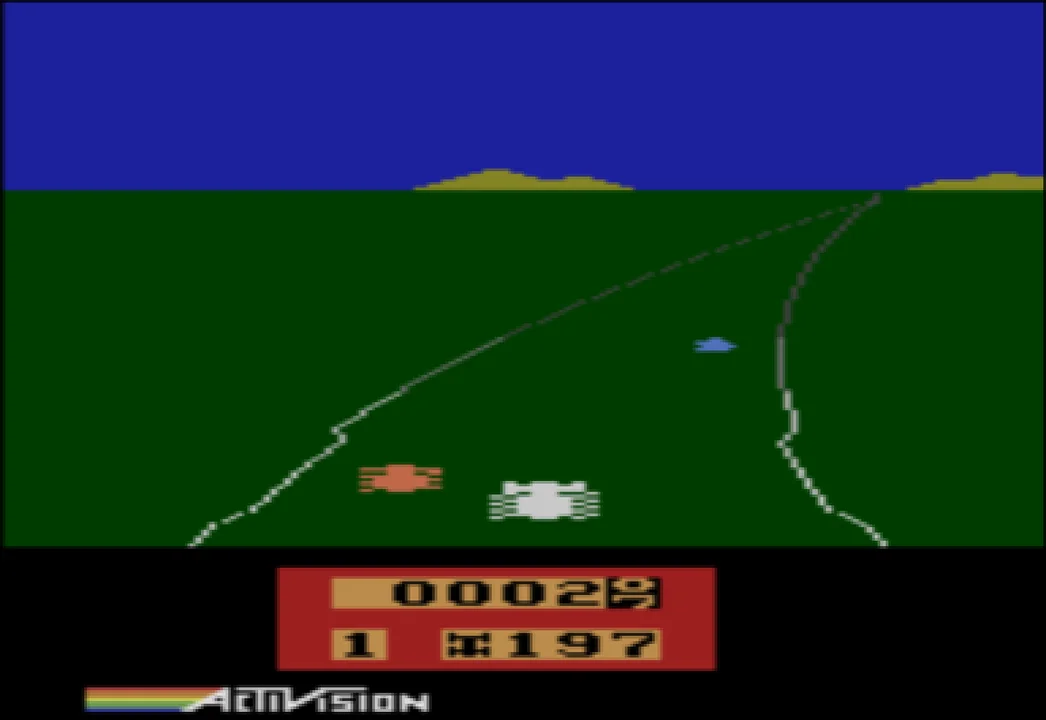
Cartwright's Megamania has you fighting off hamburgers, steam irons and bow ties, a theme Activision's ad agency came up with to separate it from all the other Space Invaders clones. Yars' Revenge started out as a Star Castle port for Howard Scott Warshaw, and the glittery stripe down the middle of the screen, the neutral zone, is drawn from bytes of the game's own code. Larry Miller made Enduro in about three months of 100-hour weeks. Day turns into night and the weather closes in while you pass 200 cars on day one and 300 every day after. Pressure Cooker is Kitchen again, inspired by burgers going down a conveyor at a Burger King. And Solaris was Doug Neubauer's follow-up to Star Raiders. It was pitched as a Last Starfighter tie-in in 1984, shelved when Tramiel took over, and finally finished in 1986.
The arcade, squeezed into a cartridge
Once Space Invaders proved the point, everyone wanted their arcade hits on the 2600. Results varied a lot.
Mario Bros. sold 1.59 million 2600 cartridges and was one of the best-selling games of 1983. Congo Bongo copped a C minus from Computer Games, which called it a disappointing conversion. Miner 2049er went from ten levels on the Atari computers to three on the 2600, and one magazine said it was "considerably slower and less fluid", but still "a very good game in its own right." Track & Field used Atari's "super chip" for extra memory. Tapper made it across as well.
Activision kept the 2600 going well past the point most companies had given up on it. Dan Kitchen did the 2600 Ghostbusters and then Kung-Fu Master, which is still talked about as a serious programming feat for the hardware. Commando followed, and Double Dragon arrived in 1989 and sold nearly 500,000 copies on a console that was twelve years old. Epyx's Summer Games, Winter Games and California Games all got 2600 versions late in the piece too.
Pac-Man, E.T. and a hole in New Mexico
By 1982 the 2600 owned the American market, and "Atari" was what people called video games in general. Then came two games Atari banked on far too hard. The 2600 Pac-Man was flickery and didn't look much like the arcade game, and it still sold upwards of seven million copies. E.T. the Extra-Terrestrial was programmed in about six weeks to make Christmas 1982. Atari made around four million cartridges and sold about 1.5 million.
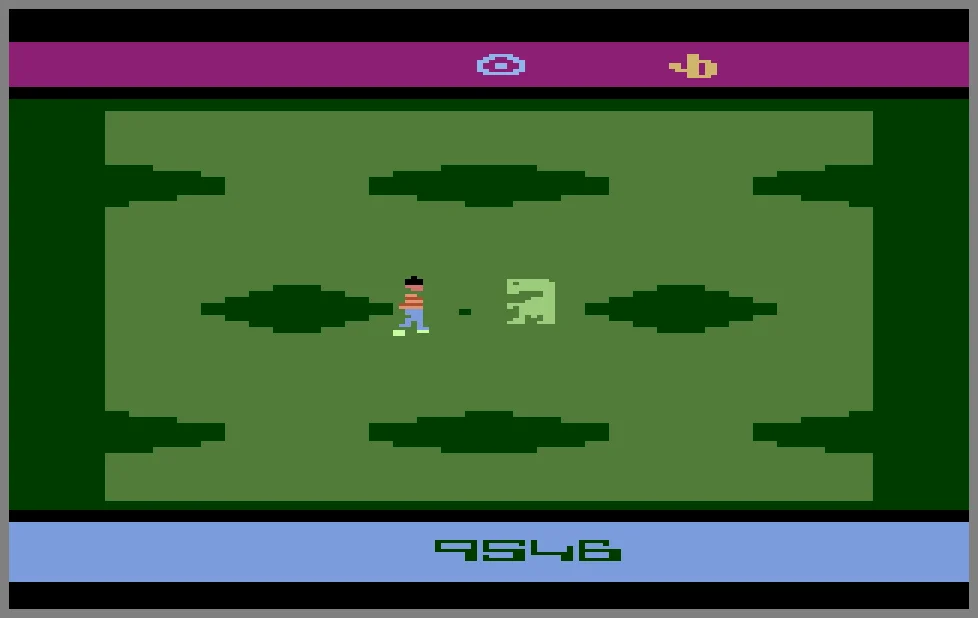
Add a flood of rubbish third-party cartridges and you get the North American video game crash of 1983. In September that year Atari sent 14 truckloads of unsold stock to a landfill in Alamogordo, New Mexico. For years it was treated as an urban legend about millions of buried E.T. cartridges. A 2014 dig found it was real, with about 700,000 cartridges in the ground. Atari lost US$536 million that year, and Warner sold the consumer business to Tramiel in July 1984 for US$240 million.
Under 50 bucks
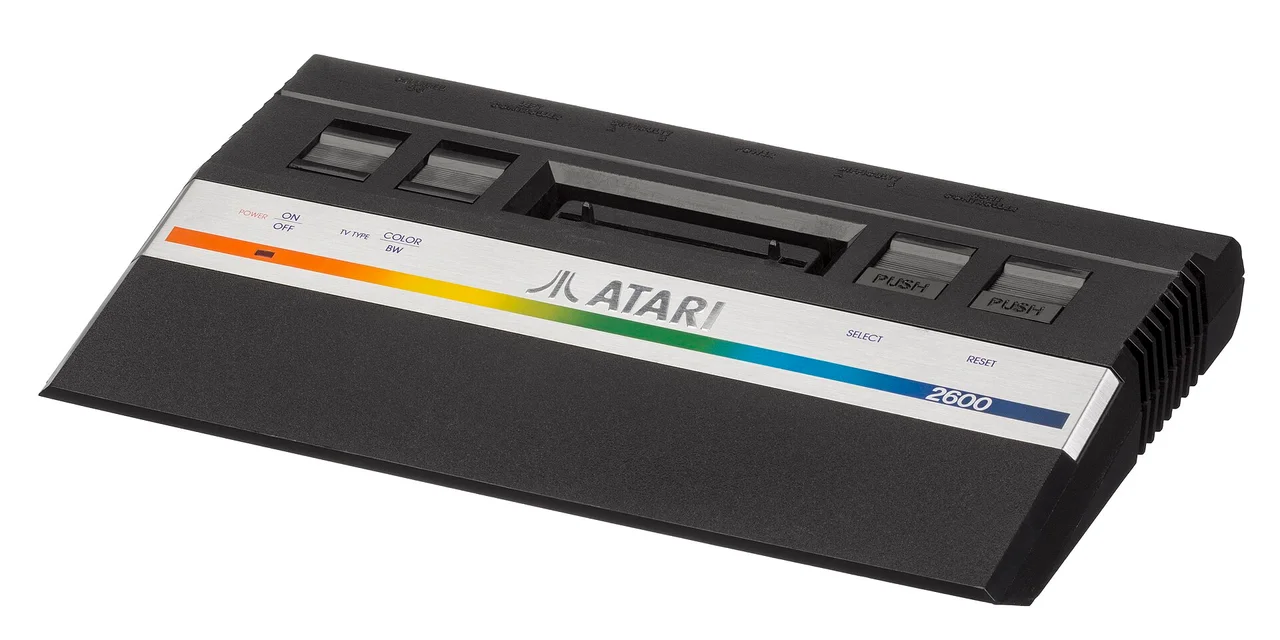
Tramiel's Atari Corporation brought the 2600 back in 1986 as a smaller, cheaper model, with ads saying it cost "under 50 bucks". It was sold alongside the new 7800, which also played 2600 cartridges. With a huge library and that price, it kept selling into the late 1980s. The last new games came out in 1989 and 1990, and the very last Atari-licensed release was Klax in 1990, which only came out in PAL. Production stopped in 1992 after more than 14 years and an estimated 30 million consoles.
Playing it now
The easiest way back in is the Atari 2600+, a modern remake that plays original 2600 and 7800 cartridges over HDMI. It launched here on 17 November 2023 at $189.95 through EB Games, with a CX40+ joystick and a 10-in-1 cartridge in the box.
There's new old stock on the way too. At Gamescom on 26 August 2026, Atari announced the Atari x Activision Collection: 39 Activision 2600 games on new physical cartridges, with boxes and printed manuals made to match the originals. Single cartridges are US$34.99, Pitfall! and River Raid are in the first batch shipping from November, and H.E.R.O. is down for 2027. They'll run on the 2600+ and 7800+ as well as original hardware. If you'd rather not deal with cartridges at all, Atari 50 (2022) on Switch, PlayStation, Xbox and Steam has a stack of Atari's own 2600 games, plus the 2600 Miner 2049er.
Which cartridge did you wear out? Let us know in the comments.
Photo credits: Atari 2600 console, Heavy Sixer, motherboard, joystick, paddle and 2600 Jr photos by Evan-Amos (public domain); Carol Shaw photo by Carol Shaw (CC BY-SA 4.0); Warren Robinett photo by Official GDC (CC BY 2.0); H.E.R.O. cartridge photo by Joho345 (CC BY-SA 3.0); Barnstorming screen photo by Patriot62371 (CC BY-SA 4.0). All sourced via Wikimedia Commons. Game box art and screenshots © their publishers (Atari, Activision, Taito, Namco and others), via Wikipedia and Wikimedia Commons. Images are used for editorial purposes only and not for profit. If you own an image used here and have any concerns, email contact@playtopia.com.au and we'll happily credit or remove it.