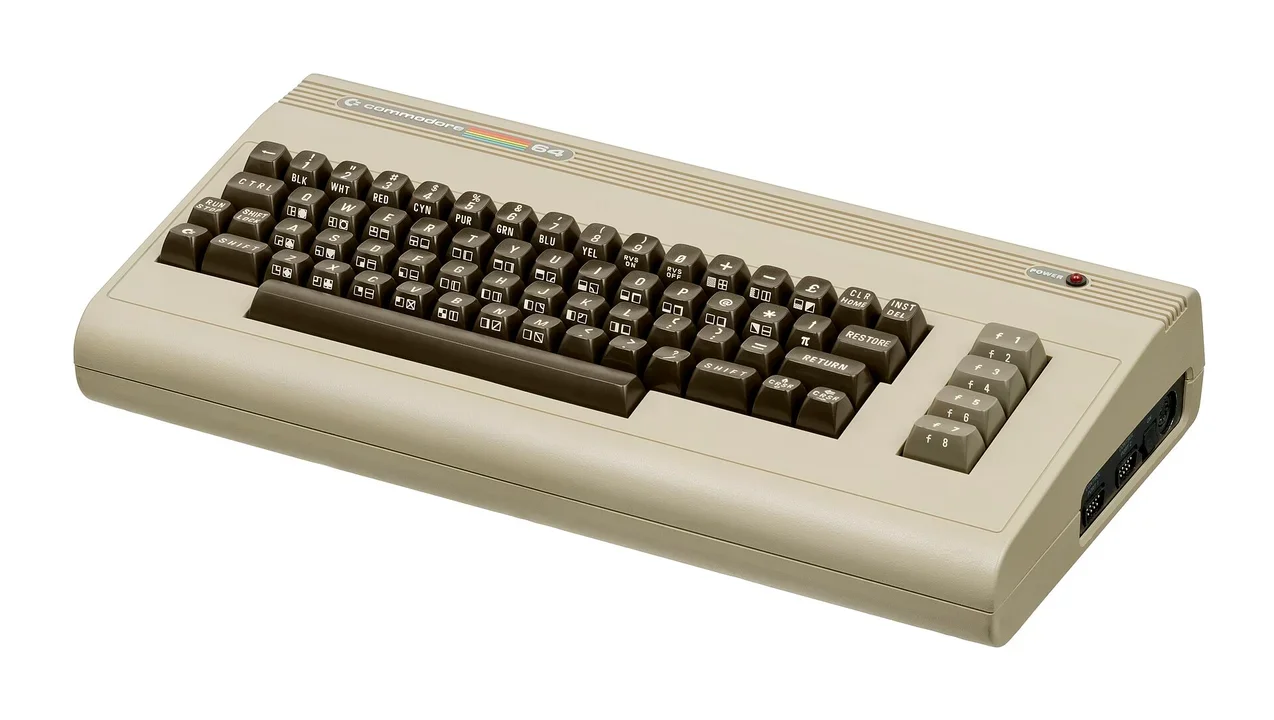
"Are you keeping up with the Commodore? Because the Commodore is keeping up with you." That was the line Commodore ran in Australian ads for the 64, and it's a fair summary of what the machine actually did here: it turned up in loungerooms that had never had a computer in them before, because it was the first one cheap enough to justify the shelf space next to the television.
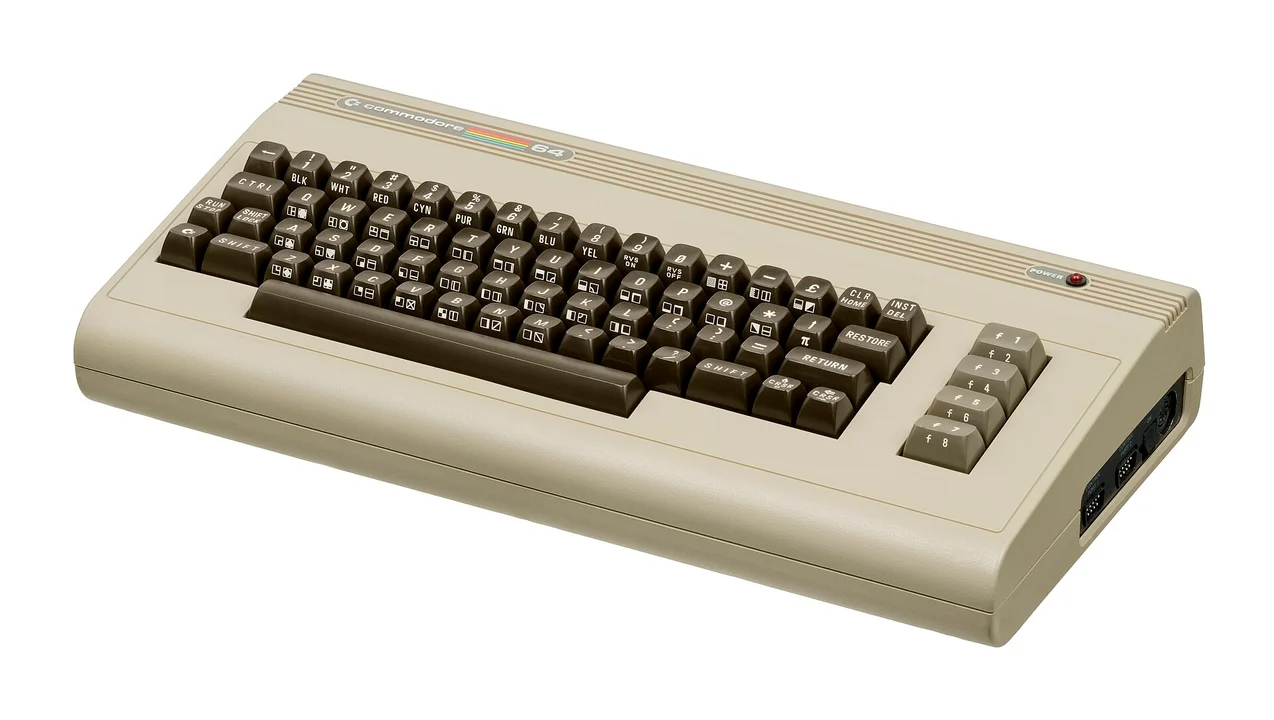
The Commodore 64 launched in the US in 1982 at $595, and by mid-1983 Commodore had hacked that down to around $300 through repeated price cuts and the occasional rebate. That price war is the whole story of why the C64 won. An Apple II cost well over a thousand dollars for less machine. Commodore sold the 64 through department stores and toy stores as well as computer dealers, so a family didn't need to know a "computer shop" existed to end up with one. By the time it was done, the C64 had sold somewhere between 12.5 and 17 million units and holds the Guinness World Record for best-selling desktop computer model of all time.
What was actually inside it
The specs sound absurd compared to today's PC's, but they were genuinely good for 1982. A 6510 CPU running at roughly 1MHz, 64 kilobytes of RAM (the number the whole machine is named after), and two custom chips that did the heavy lifting. The VIC-II handled graphics: 320x200 resolution, 16 colours, and hardware sprites that took the load off the CPU for anything that needed to move. The SID chip handled sound, three channels with proper envelope and filter controls, and it's the reason C64 game music still gets remixed and performed today. Neither chip was a cost-cutting afterthought. Both outclassed what rivals like the Atari 800 or the Apple II could do for the price, which is most of why the C64 felt like a games machine as much as a computer.
The kit you actually bought
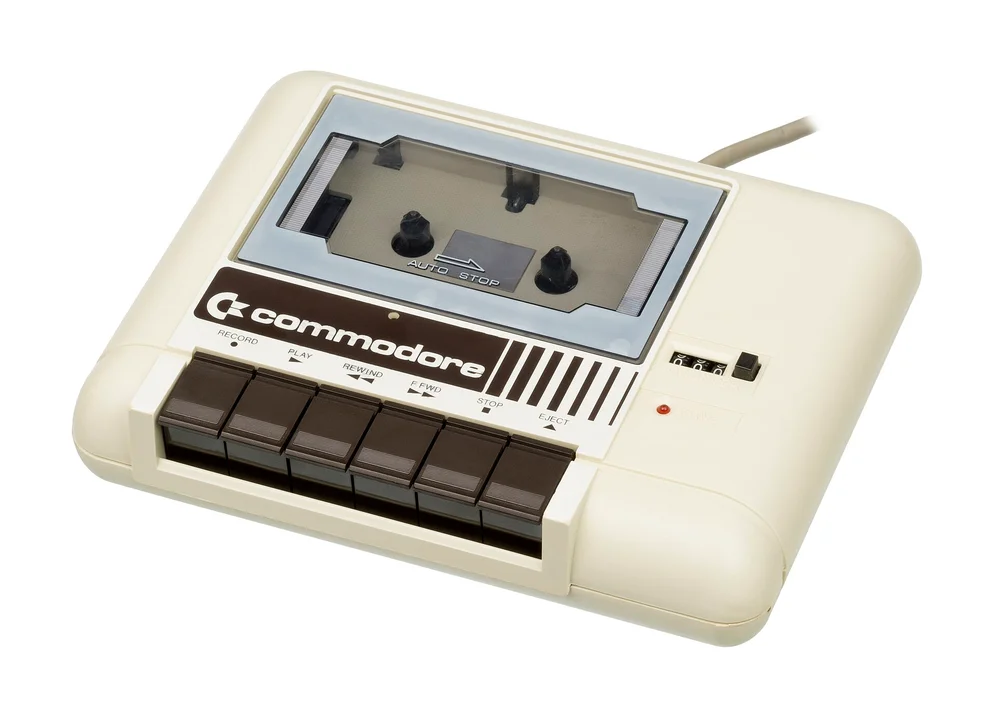
The computer itself was only the start. Getting software in and out of it meant picking a storage method, and in Australia, like most of the world outside the US, that usually meant the Commodore Datasette: a dedicated cassette deck that plugged straight into the machine. It was cheap and it was slow, something like 50 bytes a second without a turbo loader, so loading a game could mean several minutes watching a loading screen and hoping the tape didn't need a clean partway through. We covered the same trade-off recently in Press Play on Tape: The Amstrad CPC 464, and the C64 crowd lived through exactly the same wait.
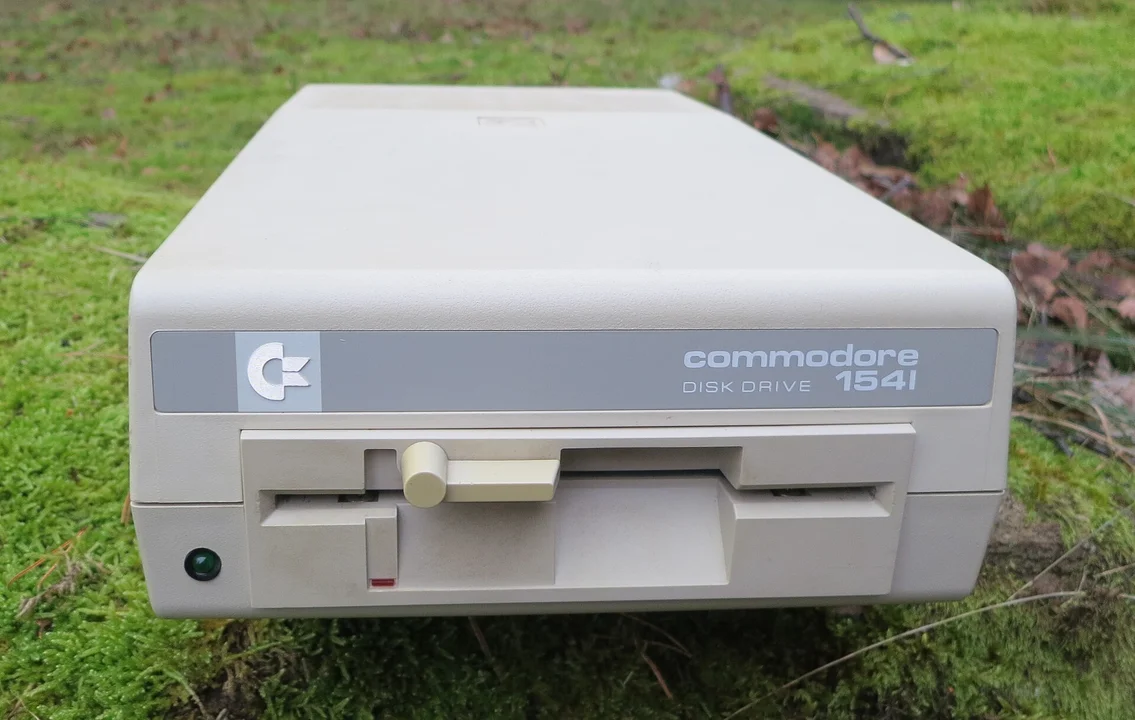
If you could stretch to it, the Commodore 1541 disk drive cut load times from minutes to something a lot more tolerable, though "fast" is relative. The 1541 had a genuine design fault, a dodgy shift register that forced the drive to shuffle data in software instead of hardware, so it topped out at around 512 bytes a second, nowhere near what the hardware should have managed. It still sold by the millions, because waiting thirty seconds for a disk beat watching a tape counter crawl for five minutes (Console Wars foreshadowing anyone?).
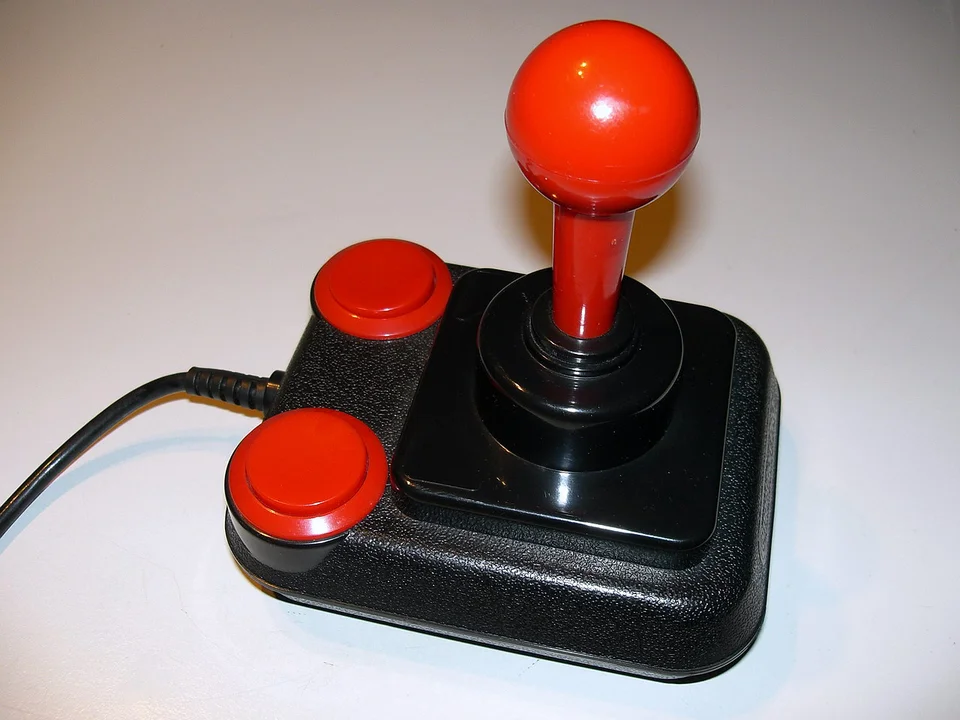
Then there was the joystick, and for a huge number of C64 owners that meant the Competition Pro: a solid black base, a stiff microswitched stick, and two fire buttons so you could mash with either hand when your thumb gave out. It wasn't the only stick going around, but it's the one most people picture when they picture a C64 setup.
The games that actually showed off the hardware
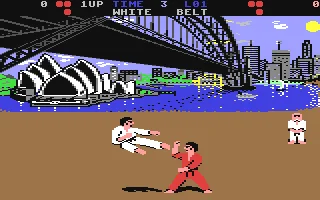
Archer Maclean's International Karate is the one to start with, because of what it proved rather than just how it played. Maclean built the C64 version from the ground up instead of porting an existing game, and it sold over 1.5 million copies in the US alone, making it the first European-developed game to become a genuine hit there. Data East sued the publisher, Epyx, claiming it ripped off their arcade game Karate Champ. Epyx won on appeal in 1988, on the basis that nobody gets to own an entire sport.
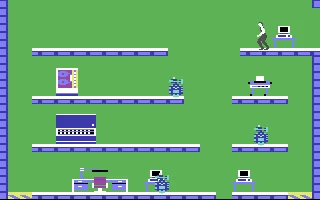
Impossible Mission, built by Dennis Caswell for Epyx in 1984, did something the C64 wasn't really meant to do: talk. "Another visitor. Stay a while. Stay forever." was digitised speech running on an 8-bit home computer, years before that was a normal thing to expect, and Zzap!64 readers later voted it the best C64 game going around. The animation was rotoscoped from real athletics footage, which is a big part of why the lead character's robot-smashing somersaults still look right today.
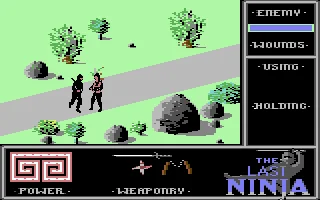
Then there's The Last Ninja, from System 3 in 1987, which took the C64 in the other direction: isometric, exploratory, and willing to let you target an enemy's head or legs separately instead of just swinging a weapon at them. Designer Mark Cale wanted to get away from side-scrolling beat-em-ups, and the result became the best-selling C64 game of its time, with European sales past 750,000 and total sales across formats estimated around 4 million.
What's left of it
None of this was cutting edge by the time the C64 finally stopped selling, but that's the point. It stayed on shelves and in loungerooms for over a decade because the price kept it there and the games kept giving people reasons to turn it on. The ad writers weren't wrong. It did keep up.
Photo credits: Commodore 64 photo by Evan-Amos (Public domain); Commodore 1541 disk drive photo by R. Henrik Nilsson (CC BY 4.0); Commodore Datasette photo by Evan-Amos (Public domain); Competition Pro joystick photo by MOS6502 (Public domain). All sourced via Wikimedia Commons. Images are used for editorial purposes only and not for profit. If you own an image used here and have any concerns, email contact@playtopia.com.au and we'll happily credit or remove it.